


Small cell lung cancer in New Zealand: Symptoms, treatment, and survival
Learn about small cell lung cancer symptoms, diagnosis, treatment, support options in New Zealand, and how your existing insurance may help.
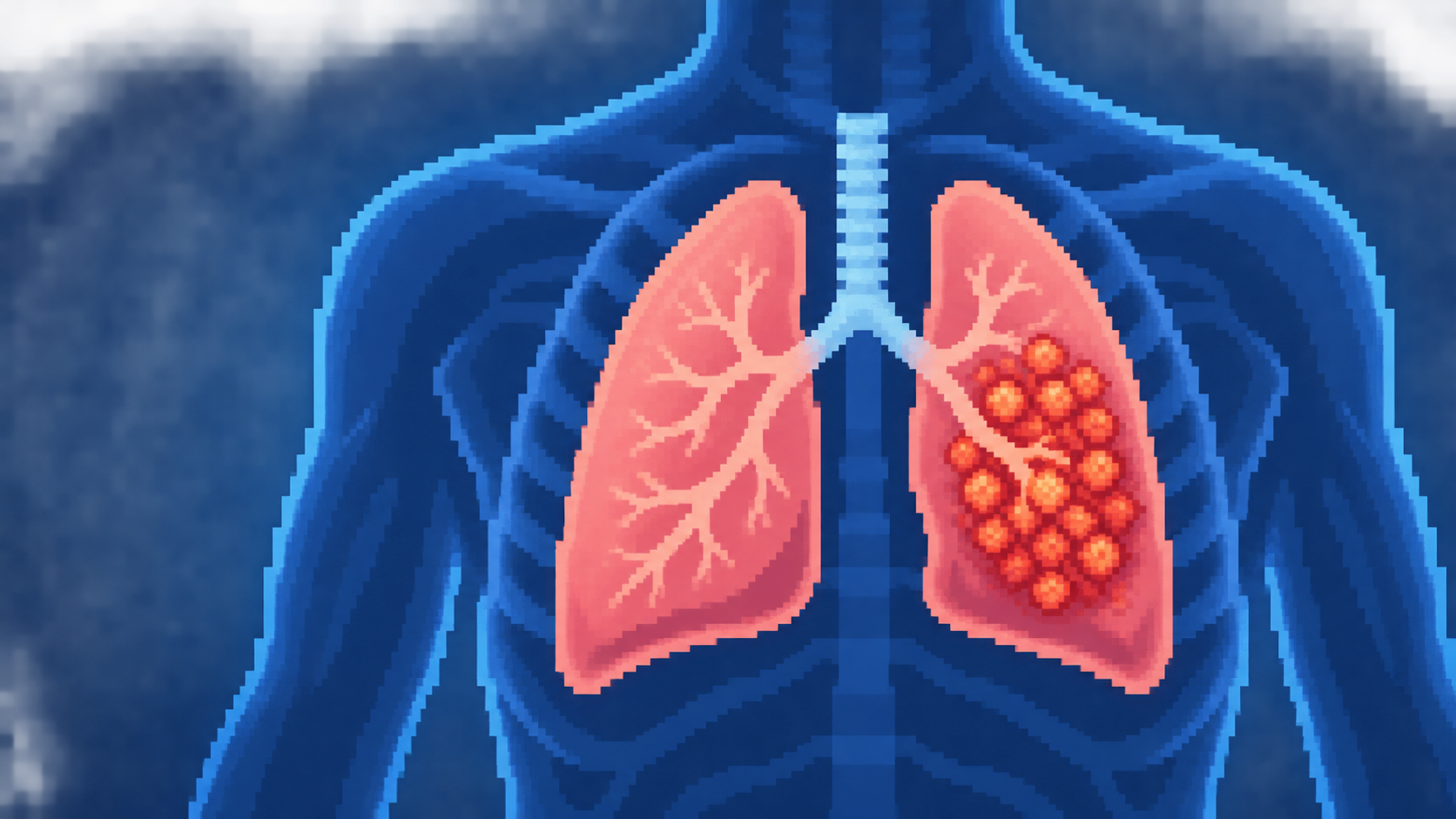
Small cell lung cancer is the most aggressive form of lung cancer. Across all New Zealand lung cancer registrations from 2007 to 2019, it made up 16% of lung cancers in Māori patients and 11% in European patients. Lung cancer took 1,856 lives here in 2023, more than any other cancer.
It usually starts in the airways, and tends to metastasise earlier than other lung cancers and is harder to treat. That is why treatment almost always begins with chemotherapy rather than surgery.
If you already hold health or trauma cover, a diagnosis is the point where that cover starts working for you, and it's worth reviewing your life cover with your adviser too. Policywise can help you read your own policy, and help the people around you understand what the products do.
- Small cell lung cancer is less common than non-small cell lung cancer, and more aggressive.
- Smoking is by far its strongest risk factor.
- Chemotherapy and radiation are the main treatments, and surgery rarely is.
- Two immunotherapies are approved here for small cell disease, and Pharmac funds neither.
- Cover can pay for private consultations and treatment, and help cover medicines Pharmac does not fund.

Health | Life | Trauma | Total and Permanent Disability | Income Protection
Learn more on different types of insurance from an expert licenced financial adviser and see what's best for your circumstances.
Learn more about different types of insurance from a licensed financial adviser and see what's best for your circumstances.
Health | Life | Trauma | Disablement | Income Protection | Mortgage Protection
What is small cell lung cancer?
Small cell lung cancer is a fast-growing cancer that forms in the tissues of the lung and is less common than non-small cell lung cancer. It is the more aggressive of the two.
The name describes what a pathologist sees. Under a microscope, these cells look much smaller than non-small cell cancer cells. You may also see it called oat cell carcinoma, because the cells resemble flat oat grains.
Small cell vs non-small cell lung cancer: what's different
Small cell and non-small cell lung cancer differ in three ways that matter: how common each is, how fast it spreads, and how it is treated. Small cell is the less common and faster-spreading of the two, and it is usually treated with chemotherapy rather than surgery.
|
Small cell |
Non-small cell |
|
|
How common |
16% of Māori and 11% of European lung cancers nationally |
The majority of NZ lung cancers |
|
Cells & growth |
Spreads more quickly; cells look smaller under a microscope |
Cells look larger under a microscope |
|
First treatment |
Chemotherapy |
Surgery for early disease |
For in-depth information on the other type, see Policywise's guide to non-small cell lung cancer.
Types of small cell lung cancer
There are two main types of small cell lung cancer, named for the cells in the cancer and how they look under a microscope. Small cell carcinoma, also called oat cell cancer, is more common; combined small cell carcinoma is a rarer subtype.
Small cell carcinoma grows quickly and often reaches other parts of the body early. In the combined subtype, the same tumour holds small cell tissue alongside non-small cell components. Published estimates of how common the combined subtype is disagree widely. One study puts it at 1% to 3% of small cell cases, another at about 20%.
How common is small cell lung cancer in New Zealand?
Small cell disease made up 16% of lung cancers in Māori patients and 11% in European patients, across all New Zealand lung cancer registrations from 2007 to 2019. Lung cancer overall is among New Zealand's most common cancers.
A separate, differently measured finding from New Zealand clinical guidance points the same way. Small cell lung cancer is more common in Māori than non-Māori even after controlling for smoking status, for reasons not yet understood.
Among 742 people treated for it at Waikato Hospital between 2000 and 2021, the mean age was 65, 55% were women, and 43% identified as Māori. Māori patients there were on average five years younger. Those are one hospital's patients, and we found no published annual national count.
What causes small cell lung cancer, and what raises your risk
Smoking is the major risk factor for small cell lung cancer. One US academic medical centre attributes 98% of small cell diagnoses to tobacco smoking, against about 85% of lung cancer cases overall according to a 2020 review. Saying so is not a judgement on anyone who smoked.
The factors below are established risk factors for lung cancer generally, and apply to small cell disease too.
What you may be able to change:
- Smoking, with starting young, smoking longer, and smoking heavily all raising risk
- Second-hand smoke, diesel exhaust, and air pollution
- Workplace exposure to asbestos, arsenic, chromium, nickel, soot, or tar
What you cannot change:
- Your age: lung cancer is rare before 40 and most often diagnosed from 60
- A family history of lung cancer, or a history of lung disease such as COPD
- Previous chest radiation treatment, and radon exposure
Having one or more of these does not mean you will develop lung cancer, and many people with several never do.
Is small cell lung cancer hereditary?
Small cell lung cancer is not usually inherited. It is mainly driven by genetic changes a person acquires during their lifetime, known as somatic mutations, rather than faulty genes passed down a family.
The changes most often involved affect the TP53 and RB1 genes; a small heritable minority is still being researched and hasn't changed how the cancer is diagnosed or tested for.
A family history of lung cancer is still listed among the risk factors. But no genetic test is used to diagnose this cancer, and no New Zealand pathway was found to offer predictive testing to a patient's relatives.
Small cell lung cancer symptoms and warning signs
Small cell lung cancer can cause hoarseness, trouble swallowing, and swelling in the face and neck veins, on top of the symptoms common to other lung cancers. New Zealand guidance notes these often come on faster, because the disease is more aggressive.
Superior vena cava syndrome is the name for that swelling. It happens when a tumour presses on the large vein returning blood from the head to the heart.
Small cell lung cancer is also notably more likely to cause paraneoplastic syndrome. That is where the tumour produces symptoms elsewhere in the body, by releasing hormones or provoking an immune response. In a Danish cohort these occurred at 237 per 1,000 person-years in small cell patients, against 135 in non-small cell patients.
Three are seen most often:
- SIADH, in 7% to 16% of patients: the body retains water and blood sodium is diluted, which can cause seizures and coma. New Zealand guidance lists the disease among the causes of low blood sodium.
- Ectopic Cushing's syndrome, in 1% to 5%: fatty deposits in the face and trunk, muscle loss, easy bruising, raised blood pressure.
- Lambert-Eaton myasthenic syndrome, in 0.4% to 3%: weak legs, tiredness, difficulty swallowing.
If you notice an unexplained cough, breathlessness, chest pain, hoarseness, or weight loss lasting more than three weeks, it's worth seeing a doctor. Coughing up a lot of blood, a swollen face with dilated neck veins, or signs of spinal cord compression needs emergency care the same day.
Diagnosing small cell lung cancer
A chest X-ray is the first-line test when lung cancer is suspected in New Zealand. Where same-day access is not available, it should be done, reported, and reviewed within a week of referral. A biopsy is what confirms small cell lung cancer.
A clear X-ray is not the end of it. Some analyses indicate up to 25% of lung cancers are not identified on one. Guidance tells GPs to repeat the film, or refer a higher-risk patient anyway, if symptoms persist beyond six weeks. From there the pathway usually runs:
- Urgent chest X-ray if you are 40 or over with symptoms, then referral to a respiratory physician, which can happen even with a clear X-ray
- A bronchoscopy, or a biopsy of lung tissue or lymph nodes, to confirm cancer cells and the type
- CT, MRI, or PET-CT scans, and scans of the bones, liver, brain, and kidneys
New Zealand has no national lung cancer screening programme. A mobile low-dose CT pilot for higher-risk people is being set up in the Lakes and Hawke's Bay areas, with screening expected from mid to late 2027. If you disagree with a planned-care decision in the public system, a referral to a private specialist is one listed option.
Stages of small cell lung cancer
Small cell lung cancer is staged as either limited or extensive, and stage is one of the factors that shapes treatment. Limited means the cancer sits on one side of the chest, where a single radiation field can cover it. Extensive means it has spread more widely.
|
Stage |
What it means |
Stage numbers |
|
Limited |
One side of the chest, in the lung where it started and possibly nearby nodes |
Stages 0 to III, including stage 3 |
|
Extensive |
Spread widely in the lung, to the other lung, to nodes on the other side, or elsewhere |
Stage IV, or stage 4 |
A TNM stage number may also be quoted, using the staging system shared with non-small cell lung cancer: extensive disease is TNM stage IV, meaning distant metastatic spread.
Among the 742 Waikato Hospital patients, most were diagnosed at the extensive stage: 72.8%, against 23.6% limited and 3.6% unstaged. Left untreated, it may spread to the brain, lymph nodes, bones, liver, and adrenal glands.
Small cell lung cancer treatment
Small cell lung cancer in New Zealand is usually treated with chemotherapy plus radiation to the tumour in the lung. Radiation to the brain is often added. Surgery is not usually an option. Which combination you are offered depends on whether your disease is limited or extensive.
Two words get used loosely whenever funding comes up: Medsafe decides whether a medicine may be sold here; Pharmac decides whether the public system pays for it. A medicine can be approved and still unfunded. That is the position small cell lung cancer is in.
Chemotherapy and immunotherapy
Chemotherapy works unusually well against small cell lung cancer at first, and usually stops working. In extensive-stage disease, overall response rates of 50% to 80% are reported internationally. Yet across all stages, only about 10% of people remain free of disease two years on, which is when most relapses happen.
It is the standard first treatment for most people with this cancer, given into a vein as an outpatient over several months. At Waikato Hospital, the usual first-line regimen was carboplatin or cisplatin plus etoposide, with radiation added alongside for limited-stage disease where cure may be possible. Side effects can include a higher risk of infection and bleeding, hair loss, fatigue, nausea, and nerve pain in the hands and feet.
Pharmac funds no immunotherapy for small cell lung cancer: pembrolizumab, atezolizumab, and durvalumab are funded for non-small cell indications only. Medsafe has nonetheless approved durvalumab for limited- and extensive-stage small cell disease, and atezolizumab for untreated extensive-stage disease.
Durvalumab's limited-stage application holds a provisional high-priority recommendation from Pharmac's advisory committee, dated April 2026, and its extensive-stage application is ranked but unfunded.
Radiation therapy
Radiation therapy uses X-ray beams to destroy cancer cells or slow their growth in the area treated. It is used three ways here: with chemotherapy on the tumour and chest nodes, on the brain as a preventive measure, and to relieve symptoms.
Sessions take 10 to 20 minutes, daily or on alternate days. Side effects can include fatigue, dry or reddened skin, nausea, painful swallowing, and chest tightness.
Prophylactic cranial irradiation, or PCI, treats the brain before any cancer has been found there. Internationally, small cell lung cancer reaches the brain in up to 10% of patients by diagnosis and a further 40% to 50% later.
Pooled international data from 987 patients in remission found PCI lifted three-year survival from 15.3% to 20.7% and cut brain metastases from 58.6% to 33.3%. It has a cost: memory problems are a recognised side effect, and patients over 70 appear more affected internationally.
Surgery, and why it is rarely an option
Surgery is not usually an option in small cell lung cancer. That is a real difference from non-small cell lung cancer, where surgery is the main treatment for early disease.
Small cell lung cancer is unusually sensitive to chemotherapy. In limited-stage disease treated with chemoradiotherapy, response rates of 70% to 90% are reported internationally, a different measure from the 50% to 80% extensive-stage response rate cited earlier. Chemotherapy and radiation lead because they reach disease an operation cannot.
Palliative and supportive care
Palliative care runs alongside treatment rather than replacing it, for people with cancer at any stage, focusing on quality of life rather than cure. Asking for it early is a good idea. Radiation, chemotherapy, and other medicines can all be used palliatively to relieve symptoms.
Supportive care comes mostly from your primary care team and a palliative care team, covering symptoms, cultural, emotional, and spiritual support, and planning ahead. Traditional healing has been central to Māori culture for generations, including rongoā Māori, romiromi, and mirimiri. Traditional Pacific healing treats mental, emotional, physical, and spiritual needs together. If either matters to you, raise it with your treatment team.
What small cell lung cancer treatment costs in New Zealand
The largest cost in small cell lung cancer is not a procedure fee but a funding gap. Two immunotherapies approved for the disease in New Zealand are not paid for by Pharmac, so anyone who wants one pays for it privately. Private pricing here is quoted case by case rather than published.
No honest figure can therefore be given for a specialist consultation, bronchoscopy, biopsy, CT, PET scan, or course of radiotherapy. For a sense of how private treatment costs compare in New Zealand generally, see Policywise's guide to the cost of private surgery. Two costs can be stated precisely:
- Prescription charges. $5 for each funded medicine item. There is no charge for children under 14, or for people aged 65 and over or Community Services Card holders, provided the prescription is from a GP or public hospital (a private specialist or dentist costs more). A Prescription Subsidy Card removes it after 20 paid items in a year.
- Travel and accommodation. National Travel Assistance requires referral by a specialist to a publicly funded treatment facility, and pays 34 cents a kilometre, lifted temporarily to 44 cents from 2 April 2026. Accommodation is covered up to $140 a night with an invoice, or $35 staying with family or friends, for patients living at least 100 km from the facility.
Palliative care and hospice services are, in general, free.
How your insurance can help
Several types of cover can help once you have a diagnosis: health, trauma, cancer, life, TPD, income protection, and mortgage protection all work differently. Health insurance, for instance, can pay for private consultations, scans, and treatment, and for medicines Pharmac does not fund. Lump-sum policies pay cash you decide how to use.
What each type of cover can do:
- Health insurance pays for private consultations, imaging, chemotherapy, radiotherapy, and Medsafe-approved medicines Pharmac does not fund. Every health insurer on Policywise's panel covers that gap in some form, though the annual limit varies widely by provider and plan.
- Trauma, or critical illness, insurance pays a lump sum on diagnosis of a covered condition, including cancer. Most base cancer definitions turn on whether the tumour is malignant rather than on a stage number.
- Cancer insurance, where offered, is often a lump sum on a confirmed diagnosis meeting the policy's criteria, though not every "cancer cover" product pays a lump sum: some instead reimburse specific treatment costs. At least one provider's lump-sum version carries no receipts and no restriction on how you spend it.
- Life insurance pays a lump sum on death. Most policies advance the full sum insured on a terminal illness diagnosis, usually defined as 12 months or less.
- Total and permanent disability cover pays a lump sum only if you become permanently unable to work, a higher bar than a diagnosis alone.
- Income protection pays a monthly benefit while you cannot work. At least one provider's benefit is reduced by other income such as ACC payments.
- Mortgage protection pays a monthly benefit sized to your repayments while you are disabled, or a lump sum on death or terminal illness.
Cover does not remove the cost. Health policies carry an excess, the amount you pay per claim before the insurer contributes (Policywise's guide explains what an excess is in full). Many also carry a co-payment, and benefit limits apply.
At least one provider waives the excess once cancer is diagnosed. Cover for unfunded medicines taken at home is confirmed at only some providers. If you hold a policy and have just been diagnosed, Policywise can confirm which benefits apply and stay with you at claim time.
A policy taken out now cannot help with a condition someone already has. A new policy will not cover this cancer itself. If you are reading this for someone else and thinking about cover for a different, unrelated pre-existing condition, that does not mean you cannot get cover at all. Some insurers may cover one if you meet specific criteria, while others set a stand-down period or adjust the premium instead.
Policywise's guides to health insurance and pre-existing conditions and life insurance and pre-existing conditions set out how.
How serious is small cell lung cancer? Survival and outlook in New Zealand
Small cell lung cancer has a poorer outlook than other lung cancer types, and the stage at diagnosis makes the biggest difference.
In a New Zealand study of 742 patients treated at Waikato Hospital between 2000 and 2021, median survival was 8.5 months, and five-year survival was under 10%. These numbers may feel confronting, and each person's own journey with the disease is different. Those are one hospital's figures rather than national ones.
Treatment is associated with longer survival. Of those who received systemic anti-cancer treatment in the same Waikato Hospital cohort, 35% were alive at 12 months, against 23% of those who did not. In the same Waikato cohort, limited-stage patients given cisplatin and etoposide reached close to 30% five-year survival.
In the same Waikato cohort, outcomes improved modestly over those 20 years. Median survival among patients receiving treatment rose from seven to nine months, and one-year survival rose from under 30% to 40%. Māori are diagnosed with small cell disease as a larger share of their lung cancers nationally.
That is a national pattern, not something the Waikato cohort alone can confirm. In the Waikato cohort specifically, 43% of patients identified as Māori, reflecting that region's population rather than a national diagnosis-share figure. Māori and non-Māori survival did not differ there once other factors were accounted for, though only a national dataset could show whether that holds true nationally.
Small cell lung cancer can double in size in as little as 25 to 30 days. Living a long time with it is possible but uncommon. Long-term survivors are reported, and about 10% of people are free of disease two years after starting treatment.
Can small cell lung cancer be cured?
Cure is possible for a minority of people with limited-stage small cell lung cancer, and it is not the usual outcome. Chemotherapy and radiation given together is the standard of care for limited-stage patients in whom cure may be possible. Yet for most people, current treatments do not cure the cancer.
Complete remission is uncommon, and most people's cancer progresses after first-line chemotherapy, with only modest benefit from later lines of treatment. Your own outlook depends on your stage, your general health, and how your cancer responds.
What happens after small cell lung cancer treatment
New Zealand guidance for small cell lung cancer asks for an appointment with your treating specialist within six weeks of finishing treatment. A chest X-ray follows at three months, reviewed by that specialist.
No routine imaging or blood tests are recommended in primary care beyond that; your specialist may still order further tests if you have symptoms. This is the same schedule used for all lung cancer types. There is no small-cell-specific version of this schedule.
Recurrence is common and early. About 40% of people with limited-stage disease have a recurrence within the first year after chemoradiation, rising to 60% within three years. If it does come back, treatment is often palliative, though second-line treatment can improve quality of life and survival.
Worth reporting between appointments: a persistent cough, breathlessness, coughing up blood, chest or shoulder pain, hoarseness, or unexplained weight loss. Cancer treatment can bring fear of recurrence, distress, depression, and anxiety. New Zealand guidance recognises these as possible psychological effects. That fear is most common in the first year, and many people say it eases with time.
Where to get support in New Zealand
Work and Income and the Cancer Society of New Zealand are good starting points. Work and Income has several payments that can apply during cancer treatment. The Cancer Society lists them alongside the counselling, transport, and accommodation it offers itself.
- Financial help. Jobseeker Support, Sole Parent Support, and the Supported Living Payment may apply. So may the Disability Allowance, Accommodation Supplement, Temporary Additional Support, Special Needs Grants, and a Community Services Card.
- National Travel Assistance. Health New Zealand helps with travel and accommodation costs if you live far from your treatment centre or attend often. The referral must come from a specialist, not a GP.
- Cancer Society of New Zealand. Its helpline, 0800 226 237, is staffed by cancer support nurses Monday to Friday, 8:30am to 5pm, and it also offers free counselling for patients and whānau. Volunteer drivers take patients to appointments, and Cancer Connect NZ offers peer support from someone who has had a similar cancer experience. Its six lodges for people travelling for treatment need a referral from a specialist or local hospital. It is a federation of a National Office and five regional divisions, so local services vary.
- Kia ora – E te iwi. A Māori-specific cancer support programme run by the Cancer Society. It is delivered as hui around the country, for people with cancer and their whānau.
- Healthline. Free, 24 hours a day on 0800 611 116, staffed by registered nurses.
- Mental health support. Free call or text 1737 any time for a trained counsellor. Other lines are Lifeline on 0800 543 354, Youthline on 0800 37 66 33, and Samaritans on 0800 726 666. None is cancer-specific. Policywise's guide to insurance for mental health covers how existing cover can help.
Policywise: Helping you prepare for life's uncertainties
Policywise is a 100% free service which tells you which health, life, and disability insurance provider best fits your needs. We offer fast, comprehensive, and easy-to-understand comparisons of all leading providers and a simple summary clearly recommending which insurer is best for your situation.
Not all insurance policies are the same. Policywise can help you sort out the duds, avoid the lemons, understand the fine print and exclusions, and get the right insurance for you and your family.
We make the important decision of where to buy your insurance super easy. We’ll answer your questions, provide experienced advice and quotes, and manage all the back and forth throughout the application process. Taking out your cover through us means you'll have our lifetime support and claims advocacy, and we'll help you negotiate a positive outcome at claim time. We can also take care of lodging any claims on your behalf and back you up if the going gets tough.
Check out the reviews on our homepage for how other New Zealanders have found our service, because now is the time to get your health and trauma insurance sorted. Give your family or someone you love the most outstanding financial support possible. Book a 5-minute callback with Policywise today; our service is fast and free.
Important Disclaimer: The information on this website is general in nature and does not consider your personal situation. It is not intended as a definitive financial guide. Before making any KiwiSaver or insurance decisions, we recommend speaking with a licensed Policywise adviser.
Policywise advisers are licensed by the Financial Markets Authority to give financial advice on KiwiSaver and health, life, and disability insurance. For more, see our Public Disclosure page.
All insurance is subject to insurer approval. Policies may include stand-down periods, exclusions, terms and conditions, and premium loadings not listed here. Optional (add-on) benefits come at an extra cost. Please refer to the relevant policy document for full and current details, as insurers may update these at any time.
Product pages on this site are summaries only. In the case of any difference between website content and the provider’s official policy wording, the provider’s wording will apply.
Quickly find the cover that’s best for you
Policywise tells you which health, life or disability insurance best matches your circumstances, 100% free. Talk to one of our insurance advisers to find out which life insurance is best for you.
References
Asia-Pacific Journal of Oncology. (2023, February 10). Lawrenson et la. Characteristics and outcomes of patients with small cell lung cancer: Findings from a New Zealand SACT database. Retrieved 24/11/2026 https://researchcommons.waikato.ac.nz/server/api/core/bitstreams/824ba6f1-8f6b-4c55-9ba3-c3edaa7d681d/content
National Institutes of Health. (2016, October ). Men et al. Further understanding of an uncommon disease of combined small cell lung cancer: Clinical features and prognostic factors of 114 cases. Retrieved 24/11/2026 https://pmc.ncbi.nlm.nih.gov/articles/PMC5101222/
National Institutes of Health. (2017, August 2). Miret et al. Potential paraneoplastic syndromes and selected autoimmune conditions in patients with non-small cell lung cancer and small cell lung cancer: A population-based cohort study. Retrieved 24/11/2026 https://pmc.ncbi.nlm.nih.gov/articles/PMC5540596/
National Institutes of Health. (2021, January 14). Rudin et al. Small-cell lung cancer. Retrieved 24/11/2026 https://pmc.ncbi.nlm.nih.gov/articles/PMC8177722/
National Institutes of Health. (2023, July 13). Krpina et al. Small cell lung carcinoma: Current diagnosis, biomarkers, and treatment options with future perspectives. Retrieved 24/11/2026 https://pmc.ncbi.nlm.nih.gov/articles/PMC10377361/
National Institutes of Health. (2024, February 1). Gurney et al. Access to and timeliness of lung cancer surgery, radiation therapy, and systemic therapy in New Zealand: A universal health care context. Retrieved 24/11/2026 https://pmc.ncbi.nlm.nih.gov/articles/PMC10846779/
National Institutes of Health. (2024, July 11). Barahman et al. Paraneoplastic neurological syndromes of small cell lung cancer. Retrieved 24/11/2026 https://pmc.ncbi.nlm.nih.gov/articles/PMC11304241/
National Institutes of Health. (2025, November 8). Mamidanna et al. Prophylactic cranial irradiation in small cell lung cancer: Evolution of evidence, current status, and future directions. Retrieved 24/11/2026 https://pmc.ncbi.nlm.nih.gov/articles/PMC12731449/
Yale Medicine. (n.d.). Small cell lung cancer. Retrieved 24/11/2026 https://www.yalemedicine.org/conditions/small-cell-lung-cancer



ON THIS PAGE
Download our insurance comparison chart
We need a few details before we can send you this content…
* All fields are required