


Cancer treatment costs in New Zealand vary according to the type of cancer and the care required. A large portion of cancer care is publicly funded, including hospital stays, diagnostic tests, and surgical and non-surgical treatments.
However, public funding has limits. You may still encounter:
- delays in diagnostic tests, specialist consultations, and cancer treatments
- expensive, unfunded cancer drugs
- ongoing indirect costs, such as travel, accommodation, home care, additional childcare, and lost income.
Private care is costly, with some treatments reaching six figures; however, having insurance can ease the pressure. Cancer insurance or other types of cover - such as trauma, health, life, income protection, mortgage protection, disablement, group, or business insurance - may help pay medical bills, or provide lump sum or monthly payments.
If you don’t have cover, you can explore your options and put protection in place before it’s needed. Policywise advisers can help you compare plans, identify policies with strong cancer cover, and explain ways to save on premium costs.

Learn more about different types of insurance from a licensed financial adviser and see what's best for your circumstances.
Health | Life | Trauma | Total and Permanent Disability | Income Protection
Private cancer treatment costs in NZ
Private healthcare offers faster access and more treatment options, but comes at a price. Costs vary depending on:
- Cancer type and stage
- Hospital and specialist fees
- Length of treatment
- Whether drugs are Pharmac-funded or unfunded.
Below are indicative private costs for common cancer treatments and tests.
|
Treatment or test |
Indicative private cost |
|---|---|
|
Chemotherapy |
$15,000 - $400,000 |
|
Pharmac-funded drugs |
$1,000 - $7,000 (per month) |
|
non-Pharmac-funded drugs |
$8,000 - $60,000 (per month) |
|
Metastatic melanoma |
$100,000 - $380,000 |
|
Lung cancer treatment |
$50,000 - $300,000 |
|
Mastectomy (unilateral) |
$25,000 - $50,000 |
|
Mastectomy with breast reconstruction |
$50,000 - $100,000 |
|
Bowel resection |
$50,000 - $80,000 |
|
Radiation therapy |
$20,00 - $70,000 |
|
Robotic prostatectomy |
$32,000 - $35,000 |
|
Prostate cancer surgery |
$24,800 - $31,100 |
|
Skin lesion removal |
$300 - $15,000 |
|
Prostate biopsy |
$5,500 - $8,000 |
|
$2,000 - $3,800 |
|
|
Diagnostic tests |
|
|
Ultrasound |
$300 - $850 |
|
CT scan |
$700 - $2,100 |
|
MRI scan |
$1,500 - $2,800 |
|
PET scan |
$2,500 - $3,500 |
Sources: AIA health insurance brochure (2025); nib Ultimate Health Max & Ultimate Health brochure (2025); Southern Cross Health Society Group annual results reflect steep increase in demand for private healthcare (2024)
Is cancer treatment free in NZ?
Most cancer treatments are publicly funded and free for eligible New Zealand residents. This includes public hospital-based care and many standard cancer therapies and drugs.
Unfortunately, waiting times in the public system can lead to delays in cancer diagnosis and treatment, and limitations in public funding for cancer medications may restrict patients’ treatment options.
On top of this, cancer patients and their families often face indirect costs, like travel, additional home help, and income losses.
What’s publicly funded
- Public hospital-based cancer treatment and support, such as surgery, chemotherapy, radiation therapy, and psycho-social services
- Other Pharmac-funded cancer drugs
- Public oncology services, including specialist consultations and diagnostic tests
- Cervical, bowel, and breast screening programmes, psycho-social support, palliative and hospice care, and travel assistance for those who need to travel far or frequently for specialist appointments.
These services are free for eligible patients, but workforce shortages and infrastructure constraints can lead to longer waits for doctor appointments, diagnostic tests, and treatment.
Data from The State of Cancer in New Zealand 2025 showed a decline in the proportion of “high suspicion of cancer” patients starting treatment within 62 days of referral. In addition, some public radiation cancer centres had seen a significant proportion of patients waiting longer than recommended for treatment.
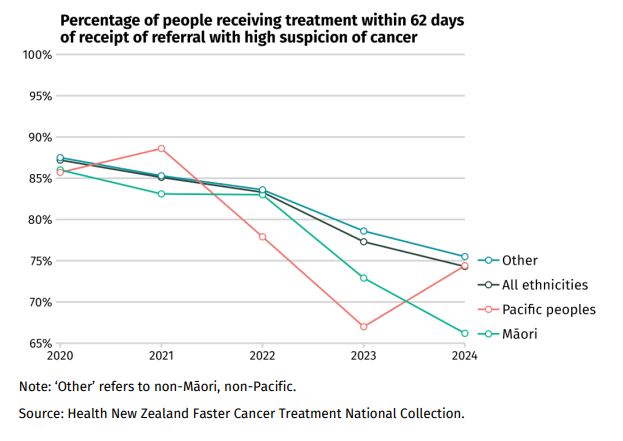
Source: The State of Cancer in New Zealand 2025.
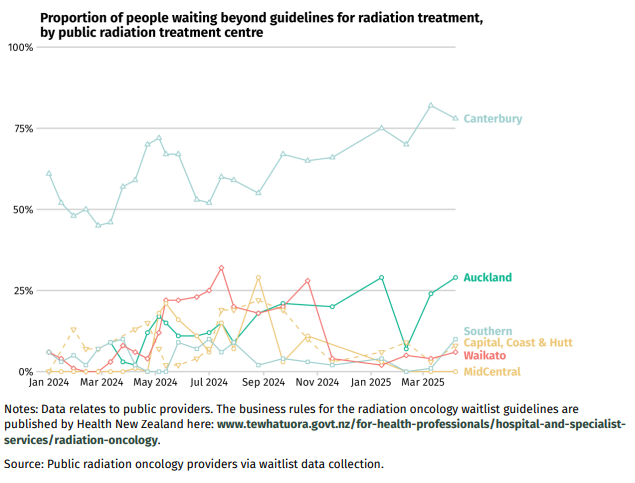
Source: The State of Cancer in New Zealand 2025.
What’s not covered
- Private care for faster access to specialists, diagnostic tests, or treatment
- Unfunded cancer drugs, including newer or innovative treatments, as well as the costs to administer them in hospital or clinic settings
- Non-medical expenses, such as travel, accommodation, and meals during consultations and treatment
- Additional household costs, including extra childcare or support at home
- Lost income if you and/or your family carer need time off work.
TIP: If you have insurance covering cancer
Insurance may help cover costs that aren’t fully publicly funded. Depending on the type of cover, personal insurance may:
- Pay for private scans, specialist fees, and treatment, helping avoid long waiting times
- Cover non-Pharmac-funded drugs and their administration costs, reducing large upfront expenses
- Provide lump sums or ongoing payments, helping replace lost income or pay for additional household expenses
- Support your emotional wellbeing by reducing financial stress during your cancer journey.
How to pay for cancer treatment costs
Insurance plans
If you’re facing cancer-related expenses, these insurance plans may help.
Cancer insurance
Depending on your cover, cancer insurance can:
- cover the cost of private cancer treatment, tests, and specialist consultations, or
- pay a lump sum you can use flexibly for unfunded treatments, extra childcare and support at home, or to replace income you or your family carer loses during treatment and recovery.
Trauma (critical illness) insurance
Trauma insurance can provide one-off or multiple payments if you’re diagnosed with cancer that meets the policy criteria. This payout helps cover unfunded medicines, private hospitalisation, travel for treatment, or allows you to take time off work without immediate financial pressure.
Health insurance
The best health insurance plans can cover private hospital treatment, specialist consultations, major diagnostic tests, and certain cancer medications. Medical cover gives the option to get faster cancer care, choose where to receive treatment, and explore unfunded treatment options if needed.
Life insurance
Although life insurance is designed to protect your family financially if you die, many policies pay out early if cancer is diagnosed as terminal and you have less than a year to live. The payout can be used as you want, from end-of-life care to ongoing household bills, debt repayments, and time to spend with loved ones.
Income protection and mortgage insurance
Income protection insurance and mortgage cover provide monthly payments if cancer prevents you from working. These can help you keep up with rent or mortgage repayments and essential bills, providing financial stability during your treatment and recovery.
Disablement insurance
If cancer causes permanent disability and prevents you from working in your occupation or any suitable role, disablement insurance may provide a lump sum payout and other benefits. This support can be used for long-term income replacement, private treatment, and ongoing care or lifestyle adjustment costs.
Group insurance
If your company provides employee insurance, the support available after a cancer diagnosis will depend on the type of cover you have. For example, company health insurance may help with private cancer treatment costs, while group life, trauma, or income protection cover can provide financial support.
Business insurance
When cancer impacts a business owner or key person, business insurance benefits will depend on the type of policy held. Some covers pay a lump sum if cancer is terminal, causes long-term or total permanent disability, or results in death. Others provide monthly payments if cancer causes total or partial disability, restricting your capacity to work.
If you’re uninsured or don’t know which cover could help if cancer affects you, Policywise advisers can compare and tailor insurance options that suit your needs and budget.
KiwiSaver early withdrawal
You may be able to withdraw your KiwiSaver savings early under one of the following grounds:
Health reasons
A cancer diagnosis that permanently impacts your ability to work or life expectancy may allow you to access all or a portion of your KiwiSaver savings early.
Significant financial hardship
You can withdraw your and your employer-contributed KiwiSaver funds if you’re experiencing significant financial hardship. This includes the following situations:
- You have a serious illness
- You need funds for your or a dependant family member’s medical treatment, palliative care, or special-needs home modifications
- Cancer has made it impossible for you to afford minimum living expenses or your home mortgage, and your lender is moving to enforce the mortgage.
Government-funded support
If you’re living with cancer or caring for someone who is, you may be eligible for government-funded support. Below are some examples; however, for a full list of options and eligibility information, visit the Ministry of Social Development website or get in touch with them directly to discuss your situation.
- Jobseeker Support: May provide a weekly benefit if cancer forces you to stop working or reduce your work hours
- Supported Living Payment: Offers weekly financial support if cancer causes a severe and long-term impact on your ability to work, or if your life expectancy is less than two years. Those providing full-time care at home for someone who isn’t their partner and otherwise needs hospital or residential-level care may also apply for support.
- Sole Parent Support: Provides weekly payments for sole parents who don’t have adequate financial support for a dependant child/children under 14. If you’re battling cancer, this regular payment can help pay for household expenses, amongst other things.
- Disability Allowance: Provides financial support to individuals with a cancer-oriented disability that could last at least six months and who have disability-related ongoing costs not fully covered by other agencies. Costs may include medical fees, prescriptions, ambulance fees, medical alarms, special foods, and travel costs.
- Community Services Card: Reduces the cost of healthcare (such as GP visits, prescriptions, and after-hours health practitioner visits) and public transport fares.
- High Use Health Card (HUHC): Lowers the cost of GP visits if you need to see your doctor more than 12 times a year for an ongoing illness, such as cancer.
- Prescription subsidy scheme: Once you or your household have paid for 20 government-funded prescriptions in a year (from 1 February), you won’t pay any further prescription charges until 31 January.
Other options
Aside from insurance benefits and government support, some people manage cancer-related costs in other ways, including:
- Charitable support: Some charities provide grants, vouchers, or help with travel and accommodation. Pharmaceutical companies may also offer cost-share or subsidy programmes for some unfunded cancer drugs.
- Crowdfunding and community support: Many people turn to family, friends, local communities, or online fundraising to help cover treatment costs or lost income.
- Using personal assets: Some sell assets or rent out part of their home to generate income.
RECOMMENDED READINGS
Non-Pharmac drugs: What they cost & how health insurance can help
Best health insurance in New Zealand (2026): Compare medical plans and quotes
Helping you take control of cancer-related financial risks
Policywise makes it easy for you to find and compare insurance plans that will help you pay for cancer treatment costs, while protecting your long-term financial wellbeing.
Policywise is a 100% free service which tells you which health, life, and disability insurance provider best fits your needs. We offer fast, comprehensive, and easy-to-understand comparisons of all leading providers and a simple summary clearly recommending which insurer is best for your situation.
Not all insurance policies are the same. Policywise can help you sort out the duds, avoid the lemons, understand the fine print and exclusions, and get the right insurance for you and your family.
We make the important decision of where to buy your insurance super easy. We’ll answer your questions, provide experienced advice and quotes, and manage all the back and forth throughout the application process. Taking out your cover through us means you'll have our lifetime support and claims advocacy, and we'll help you negotiate a positive outcome at claim time. We can also take care of lodging any claims on your behalf and back you up if the going gets tough.
Check out the reviews on our homepage for how other New Zealanders have found our service, because now is the time to get your personal insurance sorted. Give your family or someone you love the most outstanding financial support possible. Book a 5-minute callback with Policywise today; our service is fast and free.