


Insurance plays a crucial role in safeguarding your economic wellbeing during times of uncertainty. When an illness or injury hampers your ability to work, two types of insurance are worth considering: trauma and income protection. In this comprehensive guide, we'll explore the key differences between these insurances, what they are, and how they work, helping you make an informed decision that aligns with your specific needs.

Learn more about different types of insurance from a licensed financial adviser and see what's best for your circumstances.
Health | Life | Trauma | Disablement | Income Protection | Mortgage Protection
Cancer statistics in New Zealand: Registrations and deaths
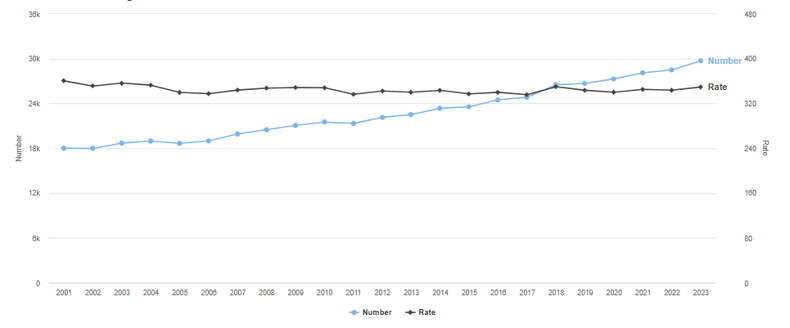
Cancer is common in Aotearoa New Zealand. In 2023 alone, there were 29,719 new cancer cases. Cancer diagnoses are predicted to climb over 50% (more than 45,000 annual cases) by 2044.
Number of cancer registrations, 2001-2023
 Source: Mortality web tool, Health New Zealand
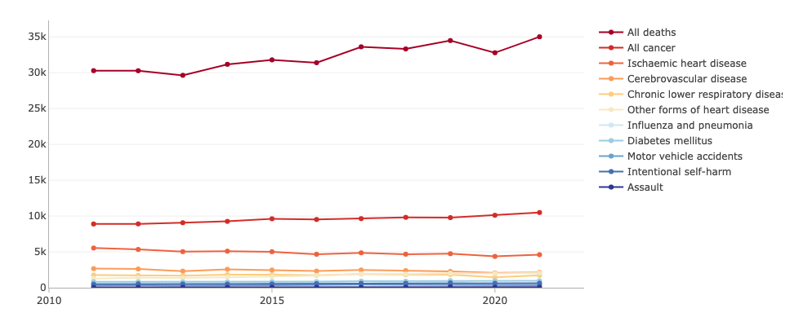
Cancer is also the leading cause of death in New Zealand. In 2021, it accounted for nearly 30% (10,492) of deaths, followed by ischaemic heart diseases (4,606), and cerebrovascular diseases (2,146).
Number of deaths, by selected causes of death, total population, 2011 to 2021
 Source: Mortality web tool, Health New Zealand
Cancer claims data
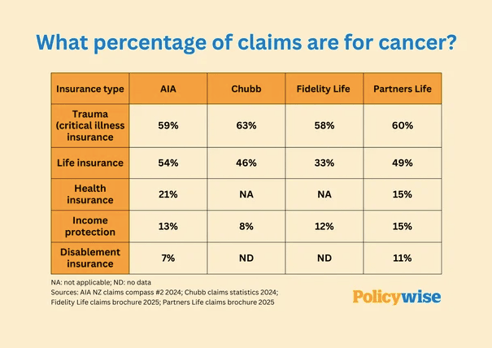
Cancer’s impact in New Zealand is also reflected in insurance claims data. Based on data from four major insurers - AIA, Chubb, Fidelity Life, and Partners Life - cancer accounts for 58%-63% of trauma insurance claims and 33%-54% of life cover payouts.
Source: Cancer insurance, Policywise
Most common cancers in New Zealand
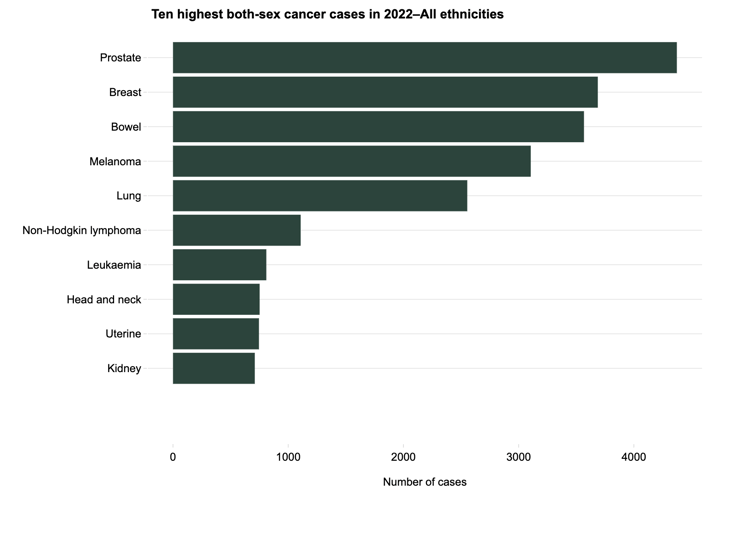
Based on 2022 data from the Cancer Control Agency, the most commonly diagnosed cancers were:
- Prostate cancer (4,373)
- Breast cancer (3,687)
- Bowel/colorectal cancer (3,567)
- Melanoma (3,105)
- Lung cancer (2,554)
- Non-Hodgkin lymphoma (1,108)
- Leukaemia (810)
- Head and neck cancer (752)
- Uterine cancer (746)
- Kidney cancer (710).
Source: State of Cancer dashboard, Cancer Control Agency
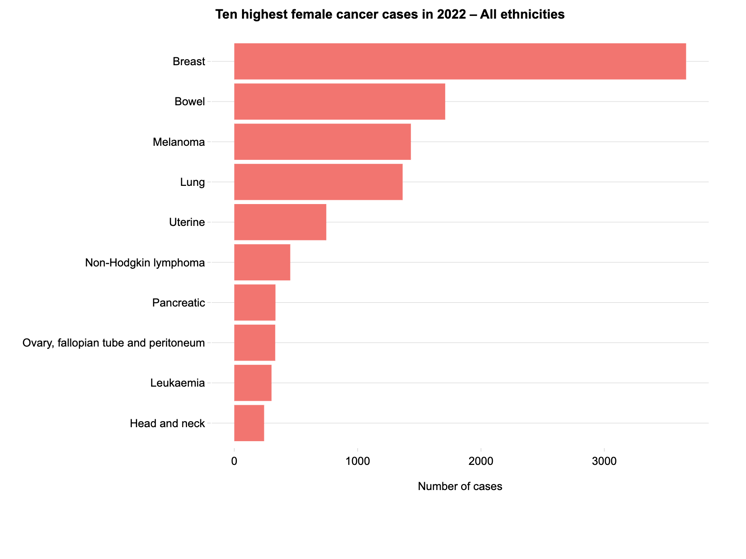
For females, the most common cancers are breast cancer (3,663), bowel cancer (1,710), and melanoma (1,432).
Source: State of Cancer dashboard, Cancer Control Agency
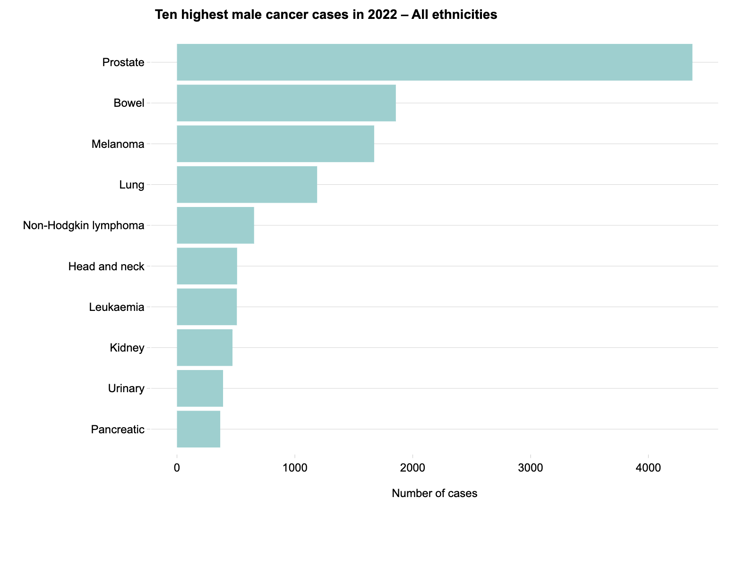
Prostate cancer (4,373) is the leading cancer type among males. But they also face high rates of bowel cancer (1,857) and melanoma (1,673).
Source: State of Cancer dashboard, Cancer Control Agency
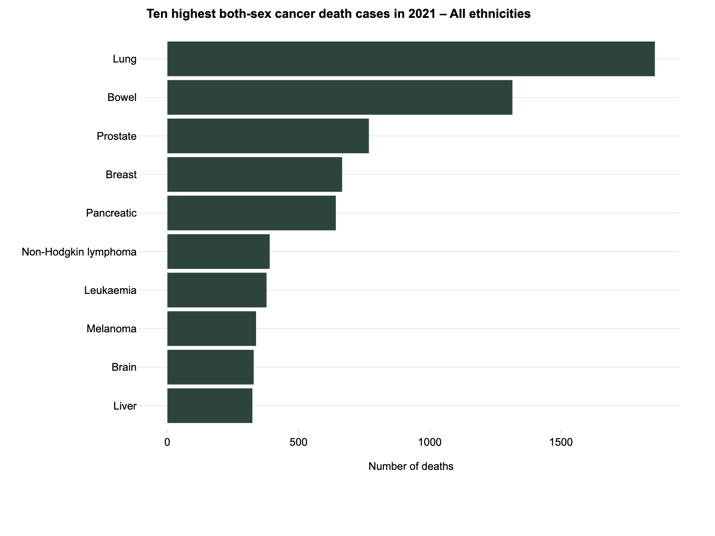
While many cancers can be successfully treated or managed, others are more likely to be fatal. Below are ten cancer types with the highest death numbers in 2021:
- Lung cancer (1,858)
- Bowel cancer (1,315)
- Prostate cancer (768)
- Breast cancer (666)
- Pancreatic adenocarcinoma (642)
- Non-Hodgkin lymphoma (390)
- Leukaemia (378)
- Melanoma (338)
- Brain cancer (329)
- Liver cancer (324).
Source: State of Cancer dashboard, Cancer Control Agency
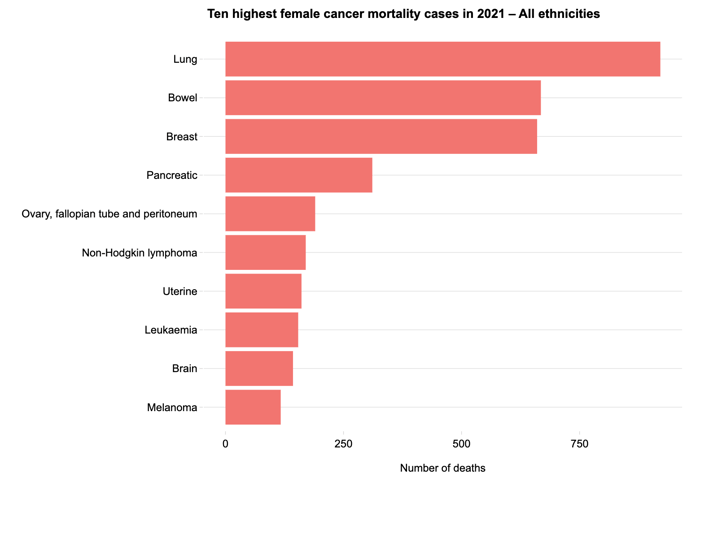
Among women, lung cancer caused the highest number of deaths (921) in 2021. This was followed by bowel and breast cancer, with 668 and 660 deaths, respectively.
Source: State of Cancer dashboard, Cancer Control Agency
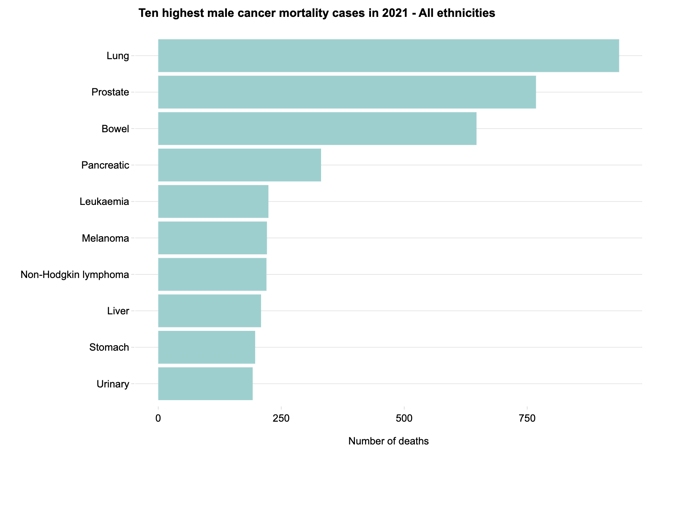
Lung cancer was also the leading cause of cancer death among men, with 937 deaths recorded. This was followed by prostate cancer (768 deaths) and bowel cancer (647 deaths).
Source: State of Cancer dashboard, Cancer Control Agency
Cancer statistics by age and life stage
Cancer can affect people at any age, but the risk generally increases as you get older.
Below are some insights into New Zealand’s 2021 cancer registration and deaths data:
- The majority of cancer cases and deaths occurred in people aged 60 and above
- Children and young people (ages 0-19) accounted for less than 1% of cancer registrations and deaths
- Over 7,400 cancer diagnoses and more than 1,400 deaths were recorded among New Zealanders aged 30-59. These numbers show that in many instances, cancer affects those who are still building their careers, raising children, or paying mortgages.
|
Age group |
Cancer registrations |
Cancer deaths |
|
0-9 |
109 |
20 |
|
10-19 |
129 |
21 |
|
20-29 |
335 |
36 |
|
30-39 |
819 |
114 |
|
40-49 |
1,916 |
319 |
|
50-59 |
4,348 |
995 |
|
60-69 |
7,667 |
2,075 |
|
70+ |
12,772 |
6,912 |
|
TOTAL |
28,095 |
10,492 |
Source: Cancer data web tool, Health New Zealand
Most common cancer registrations by life stage
In children and young people (0-24), leukaemia, lymphomas, and brain cancers are most common for both sexes.
Melanoma and colorectal cancer consistently rank among the most diagnosed cancers for men and women aged 25-64, with lung cancer becoming more common among those aged 45 and above.
Among adult women, breast cancer remains the leading cancer across age groups, with uterine and cervical cancers also commonly diagnosed before age 75.
For men, testicular cancer is more common in ages 25-44, while prostate cancer becomes the most frequently diagnosed cancer from age 45 onwards.
|
Life stage |
Most common cancer registrations (2023) |
|
|
Female |
Male |
|
|
0-24 |
|
|
|
25-44 |
|
|
|
45-64 |
|
|
|
65-74 |
|
|
|
75+ |
|
|
Source: Cancer data web tool, Health New Zealand
Most common cancer deaths by life stage
Among those aged 0-24, brain cancer and leukaemia were the leading causes of death.
Among adults aged 25-44, the leading causes of cancer death shifted to breast and colorectal cancer in females and colorectal and lung cancers in males.
For those aged 45-64, lung and colorectal cancers were leading causes of death for both sexes, with pancreatic cancer also ranking highly. Breast cancer remained a major cause of death for women, while liver cancer became more prominent in men.
In the 65-74 and 75+ age groups, lung and colorectal cancer consistently ranked among the top causes of cancer death for both males and females. Breast cancer continued to significantly affect women, while prostate cancer became one of the leading causes of cancer death in older men.
|
Life stage |
Most common cancer deaths (2022) |
|
|
Female |
Male |
|
|
0-24 |
|
|
|
25-44 |
|
|
|
45-64 |
|
|
|
65-74 |
|
|
|
75+ |
|
|
Source: Cancer data web tool, Health New Zealand
Cancer survival rates and the importance of early detection
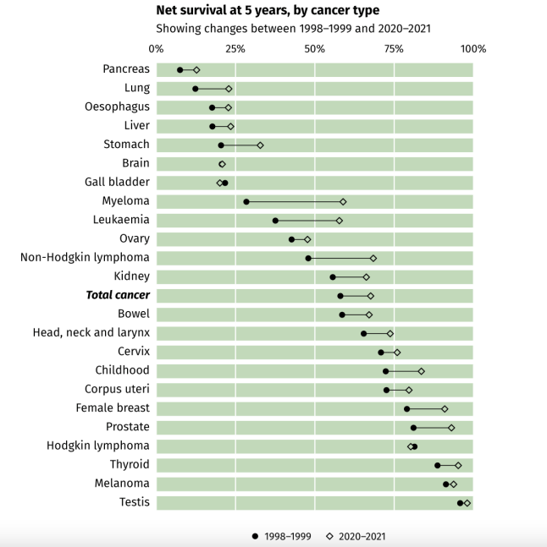
Cancer survival rates in New Zealand have improved substantially over the past two decades. Overall five-year survival rates increased from 58.0% in 1998-1999 to 67.6% in 2020-2021.
Strong improvements have been seen in myeloma, leukaemia, and non-Hodgkin lymphoma.
However, five-year survival rates remained below 25% for pancreatic, lung, oesophageal, liver, brain, and gall bladder cancer.
Source: The State of Cancer in New Zealand 2025, Cancer Control Agency
The cost of late diagnosis
A timely cancer diagnosis helps broaden a person’s treatment options and improve their chance of survival.
For several common cancers, particularly breast, prostate, lung, and bowel cancer, patients diagnosed at a more advanced stage lose significantly more years of life compared with those diagnosed early.
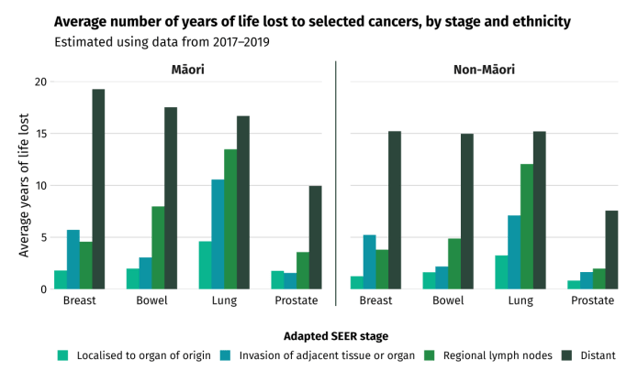
Definitions of SEER stages in this figure are:
- Localised to organ of origin = cancer is only in the organ where it started and has not spread to other parts of the body;
- Invasion of adjacent tissue or organ = cancer has directly extended and penetrated neighbouring tissues or organs;
- Regional lymph nodes = cancer cells have spread to nearby lymph nodes;
- Distant = cancer has spread to distant organs or distant lymph nodes.
Source: The State of Cancer in New Zealand 2025, Cancer Control Agency
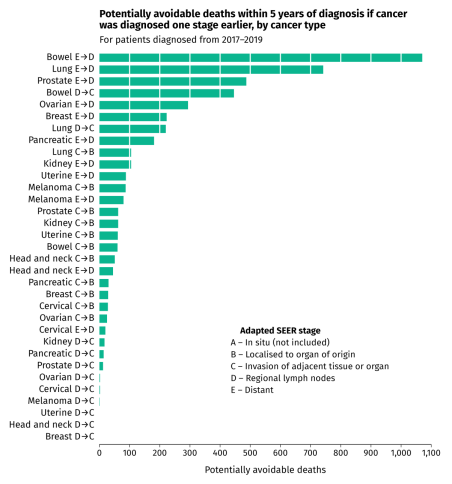
The figure below illustrates the powerful impact of earlier detection. It estimates how many deaths within five years of diagnosis might have been avoided if cancers had been detected just one stage earlier.
The findings are striking, especially for certain cancers. For example, more than 1,000 lives could have been saved if people diagnosed with the most advanced stage of bowel cancer had been diagnosed one stage earlier. The same trend appears in lung and prostate cancer, with more than 700 and 400 potentially avoidable deaths at the most advanced stages.
 Source: The State of Cancer in New Zealand 2025, Cancer Control Agency
Early detection through national screening programmes
New Zealand offers three screening programmes to help identify changes before cancer develops, or detect cancer early, when treatment is often more effective.
- BreastScreen Aotearoa – offers free mammograms for eligible women aged 45 to 69, with an extended age range up to 74 for some. Mammograms are offered every two years and aim to find breast cancer early, before it spreads
- National Cervical Screening Programme – available to people aged 25–69 who meet eligibility criteria. The programme is not fully funded, but free screening and follow-up tests are provided for defined groups
- National Bowel Screening Programme – available every two years for eligible people aged 60 to 74, with the starting age lowering to 58 nationwide from March 2026. Participants receive a free test kit in the mail, which can be done at home.
RECOMMENDED READINGS
Long waiting lists in NZ's public health system: Causes and impacts on patients
Non-Pharmac drugs: What they cost & how health insurance can help
Childhood cancer in NZ: Symptoms, treatment, and tips for parents
Public health system challenges
New Zealand’s public health system delivers comprehensive cancer care services and is working hard to expand capacity. However, data show ongoing challenges, including declining performance against treatment time targets.
When someone is urgently referred to hospital and specialist services with a high suspicion of cancer, they should be diagnosed and begin treatment within 62 days. However, the percentage of patients starting treatment within 62 days had declined in recent years, falling from over 85% in 2020 to less than 75% by 2024. Delays in diagnosis are playing a role in this trend.
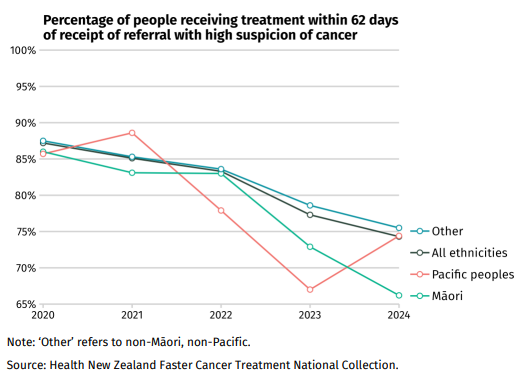
Source: The State of Cancer in New Zealand 2025, Cancer Control Agency
Delays can also occur after a treatment decision is made. In New Zealand, the percentage of people receiving treatment or other cancer management within 31 days of the decision to treat fell from nearly 90% in 2020 to less than 85% in 2024.
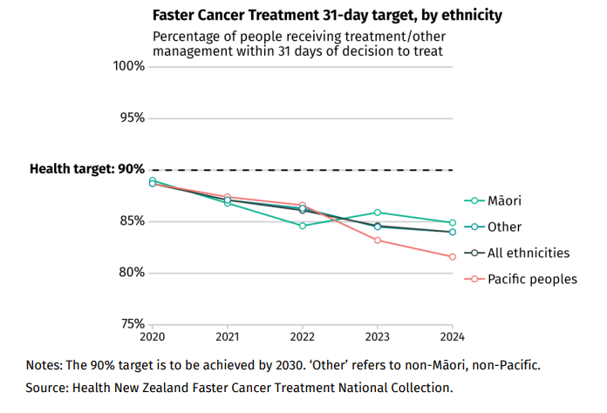
Source: The State of Cancer in New Zealand 2025, Cancer Control Agency
Access to cancer surgery
For patients eligible under the Faster Cancer Treatment (FCT) pathway, surgery should begin within 31 days of the decision to treat. However, timely access to cancer surgery has declined among FCT-eligible patients, from 80.9% in 2020 to 72.7% in 2024.
Access to radiation treatment
Radiation was the first treatment for 8.0% of FCT-eligible patients between 2020 and 2024, with 2.7% receiving concurrent radiation and chemotherapy. Performance against the 31-day target declined, with 83.0% treated on time in 2024, down from 89.1% in 2020.
Challenges in accessing radiation oncology
Some patients in New Zealand still face barriers to accessing radiation treatment. Key challenges include:
- Workforce shortages
- Availability of LINAC machines
- The need to travel long distances for treatment.
Because highly specialised services are not available in every centre, some patients and their carers must travel long distances for treatment. This can mean staying away from home or work for days or weeks, leading to travel and accommodation costs and potential loss of income during an already stressful time.
Access to radiation treatment can also differ by region. The data below reveal that many patients in Canterbury waited beyond recommended timeframes, compared with other parts of New Zealand. This is due to various reasons, including resource and workforce constraints.
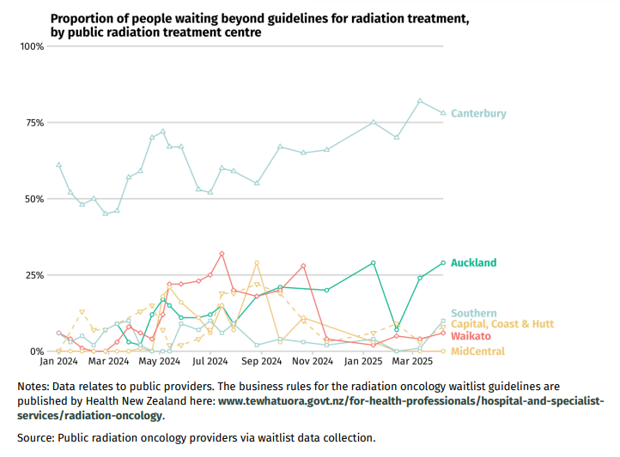
Source: The State of Cancer in New Zealand 2025, Cancer Control Agency
The financial impact of cancer on New Zealanders
Even with public healthcare support, a cancer diagnosis can place significant financial strain on patients and their families. On top of ongoing household bills, they may face:
- Lost or reduced income while undergoing treatment
- Out-of-pocket costs, like travel and accommodation expenses, unfunded treatments, and medical expenses, if they opt to go private.
Without adequate financial protection, some families may be forced to use up their savings, access KiwiSaver early, or take on debt during a serious illness. But if you already have insurance in place, you may not need to.
What insurance can do if you’re diagnosed with cancer
Different insurance products can support you in different ways, whether you need help paying for private diagnostic tests and treatment or funds for medical and household costs.
- Cancer insurance - either pays a lump sum or covers the actual costs of cancer care, depending on the policy. It can help fund private diagnostics, tests, treatments, and non-Pharmac funded cancer drugs
- Trauma (critical illness) cover - pays a lump sum if you’re diagnosed with cancer or other serious conditions. The payout can be used flexibly—for private treatment, unfunded drugs, living expenses, debt repayment, or home help
- Health insurance - covers eligible private medical costs including diagnostic tests, surgery, chemotherapy, radiotherapy, and specialist consultations, and certain non-Pharmac drugs. It can help you avoid public waiting times, access private treatment with fewer out-of-pocket costs, and have more choice in where and when you’re treated
- Life insurance - provides a lump sum payout to your dependants if you pass away, with many policies offering early payment if you’re diagnosed with terminal cancer (expected to result in death within 12 months)
- Salary protection insurance and mortgage protection cover - provide monthly payments if cancer prevents you from working, helping replace lost income during treatment and recovery
- Total permanent disablement (TPD) insurance - pays a lump sum if cancer leads to a permanent disability that stops you from working. The payout can help cover long-term treatment and recovery costs, home or vehicle modifications, and ongoing living expenses.
Choosing cancer-related cover can feel overwhelming, especially when policy terms, eligibility criteria, and claim conditions vary widely between insurers.
A Policywise adviser can help you by:
- Comparing options from leading insurers: AIA, Accuro/Unimed, Asteron Life, Chubb, Fidelity Life, nib, Partners Life, and Southern Cross
- Explaining claim conditions and policy wording in plain English
- Helping structure cover to suit your life stage and budget
- Exploring cost-saving strategies without compromising protection.
Rather than guessing or being limited to a single insurer’s offering, you get independent, personalised advice to help you make an informed choice.
Contact Policywise today to explore your options and find insurance solutions that protect your family from the financial impact of cancer.
Building financial resilience against serious illnesses
Policywise makes it easy for you to compare insurance plans that support cancer care and protect your income, savings, and long-term financial wellbeing.
Policywise is a 100% free service which tells you which health, life, and disability insurance provider best fits your needs. We offer fast, comprehensive, and easy-to-understand comparisons of all leading providers and a simple summary clearly recommending which insurer is best for your situation.
Not all insurance policies are the same. Policywise can help you sort out the duds, avoid the lemons, understand the fine print and exclusions, and get the right insurance for you and your family.
We make the important decision of where to buy your insurance super easy. We’ll answer your questions, provide experienced advice and quotes, and manage all the back and forth throughout the application process. Taking out your cover through us means you'll have our lifetime support and claims advocacy, and we'll help you negotiate a positive outcome at claim time. We can also take care of lodging any claims on your behalf and back you up if the going gets tough.
Check out the reviews on our homepage for how other New Zealanders have found our service, because now is the time to get your cancer cover sorted. Give your family or someone you love the most outstanding financial support possible. Book a 5-minute callback with Policywise today; our service is fast and free.