


Squamous cell carcinoma: Symptoms, treatment and costs in NZ
Learn about squamous cell carcinoma symptoms, treatment, and costs in NZ, plus how insurance and other financial support options may help.
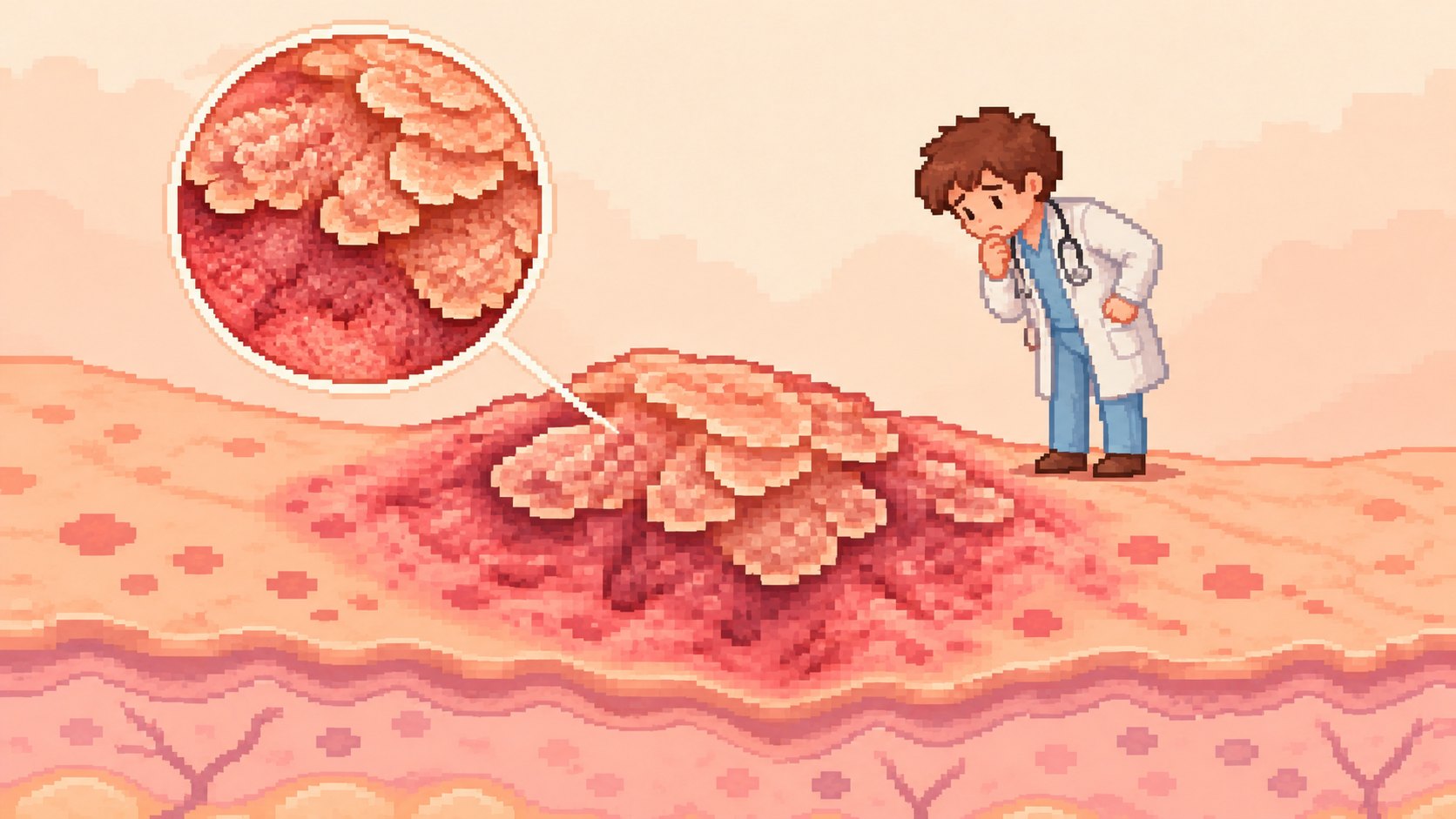
Skin cancers are among the most common cancers in NZ, and squamous cell carcinoma is the second most common type. Officials estimate around 90,000 non-melanoma skin cancer cases a year, more than all other cancers combined.
Squamous cell carcinoma, or SCC, starts in the flat squamous cells of your outer skin layer. It is one of several skin cancers caused mainly by sun exposure, and it can grow faster than basal cell carcinoma.
A diagnosis, or even a worrying spot, can be unsettling to deal with. Treatment here can mean a public waiting list or a private bill, which is where the cover you already hold matters. Policywise is an independent adviser who can check what your policy pays for.
- SCC is usually curable when found and treated early, and most cases never spread.
- It's worth getting a scaly, crusty or non-healing sore checked if it hasn't cleared in 4 to 6 weeks.
- Cumulative sun exposure causes most cases, and a weakened immune system raises the risk sharply.
- If you already hold insurance, health cover is usually where SCC treatment costs sit, and trauma cover generally pays only once the cancer has spread to lymph nodes, bone or distant organs. What it pays depends on your situation and the type of cover you hold.

Health | Life | Trauma | Total and Permanent Disability | Income Protection
Learn more on different types of insurance from an expert licenced financial adviser and see what's best for your circumstances.
Learn more about different types of insurance from a licensed financial adviser and see what's best for your circumstances.
Health | Life | Trauma | Disablement | Income Protection | Mortgage Protection
Is squamous cell carcinoma serious? Why early treatment matters
Squamous cell carcinoma is serious, but it is usually curable when treated early. Health New Zealand describes SCC as able to grow faster than basal cell carcinoma, able to spread over weeks to months, and sometimes life-threatening. Surgery often cures it, and the chances are best while the lesion is small.
For scale, non-melanoma skin cancer caused 218 deaths in New Zealand in 2022, against 316 melanoma deaths. Spread depends heavily on site: about 5% on sun-exposed skin, 14% on the lip, and roughly 38% for an SCC arising in a scar or in non-sun-exposed skin.
How fast does squamous cell carcinoma spread?
Most SCCs never spread, and those that do usually declare themselves within a year or two. Growth rate is the clearest warning. Tumours growing faster than 4 mm a month reach nearby lymph nodes at a median of 5 months, against 17 months for slower-growing ones.
In a registry study of 11,137 patients, 1.9% developed metastases, with a median of 1.5 years. It can reach the lungs, liver, brain, and bone.
How common is squamous cell carcinoma in New Zealand?
A Northland study put New Zealand's incidence, adjusted for age and ethnicity, at 580 per 100,000 patient-years, the highest reported outside Australia. No exact national figure beyond that regional estimate exists, because the New Zealand Cancer
Registry records all primary cancers except squamous and basal cell skin cancers, so officials rely on the overall non-melanoma estimate noted above. Internationally, incidence climbs with age and is about twice as high in men as women.
Squamous cell carcinoma symptoms and warning signs
Health New Zealand describes SCCs as skin lumps that are scaly or crusty, can ulcerate, and can be tender or painful. They range from a few millimetres to several centimetres across.
Warning signs to watch for:
- A firm bump or nodule, which may look skin-coloured, pink, red, black, or brown.
- A flat sore with a scaly crust.
- A new sore or raised area on an old scar or sore.
- A rough, scaly patch on the lip that may turn into an open sore.
- A red, sore or rough patch inside your mouth.
- A new or changing sore that has not healed in 4 to 6 weeks.
What does squamous cell carcinoma look like?
Solar keratoses, or sunspots, are not SCC themselves. They are a sign of sun damage and a marker of being prone to skin cancer, but SCC can arise directly from one, so a sunspot that starts thickening is worth showing someone.
As a lesion develops, two signs are worth asking about: how long it has been there, and whether it bleeds or itches, since a clinician assessing a suspected SCC checks both.
Where squamous cell carcinoma appears on the body
Squamous cell carcinoma appears most often on the skin that gets the most sun. About 80% of SCCs are found on the head and neck. Non-melanoma skin cancers, including SCC, are also commonly found on the face, ears, hands, arms, and lower legs.
Skin tone changes the pattern. In people who sunburn easily, SCC is usually on heavily sun-exposed skin. In people with Black and brown skin, it more often appears on skin that is not sun-exposed, and the legs are a characteristic site.
What causes squamous cell carcinoma, and who is most at risk?
Ultraviolet radiation causes most squamous cell carcinoma, and risk is highest for older adults, outdoor workers and people with a weakened immune system, among the factors covered below.
Almost 85% of cases in white populations worldwide are attributable to excessive UV exposure. SCC is linked particularly to chronic, cumulative exposure, such as years of outdoor work.
What you cannot change:
- Age, with most cases in people aged 60 and over.
- Light eyes and blonde hair, each an independent risk factor.
- Rare inherited conditions affecting DNA repair or skin fragility.
What you can:
- Cumulative sun exposure and sunbeds, which it is illegal for operators to let under-18s use.
- Smoking, which carries a pooled odds ratio of 1.52 for cutaneous SCC.
- Some medicines, including hydrochlorothiazide and voriconazole, are classed as causing SCC of the skin.
Having one or more of these factors does not mean you will develop squamous cell carcinoma. Plenty of people with several never do, and SCC also appears in people with no known risk factors at all.
Is squamous cell carcinoma hereditary?
Squamous cell carcinoma is not an inherited cancer in the way some bowel and breast cancers are. What families usually share is skin type and sun habits rather than the cancer itself. A family-history risk score explained only about 1% of the variation in SCC and basal cell carcinoma.
Rare genetic conditions are a separate matter. Xeroderma pigmentosum, a DNA-repair disorder, raises non-melanoma skin cancer risk around 10,000-fold, and albinism and epidermolysis bullosa (a rare skin-fragility disorder) also raise SCC risk.
Other risk factors
Solid-organ transplant recipients develop SCC at 65 to 100 times the rate of the general population. In that group, SCC overtakes basal cell carcinoma as the most common cancer.
- Weakened immunity. HIV carries a 5.4-fold increased SCC risk and chronic lymphocytic leukaemia a 4.82-fold risk.
- HPV. IARC gives beta-HPV types 5 and 8 only limited evidence, and only in people with the rare skin condition epidermodysplasia verruciformis. HPV is absent from IARC's sufficient-evidence list for non-melanoma skin cancer generally.
- Smoking. A separate, women-only UK cohort found current smokers had 22% higher SCC incidence than never-smokers, a different population and metric from the pooled estimate above.
- Chronic wounds and scars. SCC can arise in an old scar or burn, typically decades later, known as Marjolin's ulcer.
Having any of these factors does not mean you will develop squamous cell carcinoma, and SCC occurs in people with none of them.
How is squamous cell carcinoma diagnosed?
Diagnosis starts with your doctor examining the lesion and ends with a biopsy. The clinician assesses its size, location, and appearance, then takes a small tissue sample if cancer is suspected. That sample goes to a laboratory and is examined under a microscope to confirm the diagnosis.
In New Zealand, a dermatoscope used by a trained clinician in general practice improves accuracy over examining a lesion by eye, though this is a general dermoscopy technique rather than an SCC-specific finding.
New Zealand primary-care guidance from 2013 sets the referral threshold: a well-defined low-risk tumour under 2 cm can usually be managed in general practice, while larger, deeper or recurrent tumours need a specialist.
Specialist access is the constraint: more than 37% of dermatology patients waited over four months for a first specialist appointment in January 2024. In August 2026, the Government announced the first stage of funding for GP skin-cancer upskilling, part of a wider $23 million community-healthcare investment. In some areas, the only options were a long hospital wait or paying privately.
There is no national skin cancer screening programme here, only the three for breast, cervical, and bowel cancer. The Cancer Society says there is no evidence population screening works, recommending individualised surveillance for higher-risk patients instead.
When to see a doctor about a skin change
See a doctor straight away for any new or changing skin growth, and treat a sore that hasn't healed within 4 to 6 weeks as a specific red flag. International guidance sets a looser threshold of about two months, covering a sore, scab, or flat patch of scaly skin that will not go away.
Types of squamous cell carcinoma
Squamous cell carcinoma of the skin has several variants. Verrucous carcinoma is a relatively indolent skin variant. Desmoplastic and acantholytic SCC are uncommon but aggressive.
Keratoacanthoma is a fast-growing nodule that regresses on its own. It is sometimes grouped alongside SCC variants, though the World Health Organisation now treats it as a distinct entity rather than an SCC variant.
Squamous cell carcinoma is also a cell type rather than a single disease. Squamous cells line the skin, the hollow organs and the respiratory and digestive tracts, and most cancers of the anus, cervix, head and neck, and vagina are squamous cell carcinomas too.
This article covers only the cutaneous form, meaning SCC of the skin.
Squamous cell carcinoma in situ versus invasive SCC
The difference is whether the cancer has broken through the basement membrane under your epidermis. In SCC in situ, also called Bowen's disease, abnormal cells fill the full thickness of the top skin layer but stay inside it. Invasive SCC has breached that membrane and can reach blood vessels and lymphatics.
Bowen's disease and SCC in situ are two names for the same thing. Untreated, only three to five in every 100 cases become invasive, usually over a long period. Cure rates for Bowen's disease are high, though recurrence is common whichever treatment is used.
Stages and grades of squamous cell carcinoma
Squamous cell carcinoma is staged. It is not itself a stage. The American Joint Committee on Cancer sets TNM staging (tumour size, lymph node involvement and metastasis) for cutaneous carcinoma of the head and neck specifically.
A separate AJCC system applies to eyelid carcinoma. It groups disease into stages 0 to IV by tumour size and depth, lymph node involvement, and distant spread.
The table below applies to head-and-neck SCC.
|
Stage |
TNM |
In plain terms |
|
0 |
Tis N0 M0 |
SCC in situ. Abnormal cells sit in the top skin layer only. |
|
I |
T1 N0 M0 |
Tumour 2 cm or less. No nodes, no distant spread. |
|
II |
T2 N0 M0 |
Tumour over 2 cm but 4 cm or less. No nodes. |
|
III |
T3 N0 M0, or T1 to T3 N1 M0 |
Tumour over 4 cm, or minor bone erosion, nerve involvement or deep invasion, or one nearby node. |
|
IV |
T4 any N, any T with N2 to N3, or any M1 |
Bone or skull-base invasion, larger or multiple nodes, or spread to distant organs. |
Squamous cell carcinoma treatment
Most squamous cell carcinoma is treated by cutting it out. Surgical removal is the standard approach for both basal cell and squamous cell carcinoma in New Zealand. When skin cancer is found early, most lesions can be removed completely.
Surgery
Excision is the first-line treatment, and the margin depends on the tumour's risk. New Zealand primary-care guidance from 2013 gives a 4 mm margin for a well-defined low-risk tumour under 2 cm. Larger, poorly differentiated, deeper or recurrent tumours need at least 6 mm.
- Simple excision removes the lesion surgically.
- Wide excision takes a larger margin of skin, and a skin graft may be needed where a large area is removed.
- Mohs surgery checks margins on site in stages during one visit, with cure rates reported up to 99% for primary skin cancer. It is practised here for high-risk facial tumours, though public availability is not published.
Side effects are mainly local: bleeding, wound infection, and a scar that can take up to a year to settle.
Non-surgical treatments
Most non-surgical options lack strong comparative evidence against surgery, though curettage with electrodesiccation and cryosurgery are listed among NCI's recognised options for localised invasive SCC.
- Curettage and electrodesiccation. The clinician scrapes the lesion away, then uses heat to destroy remaining cells.
- Cryotherapy. Liquid nitrogen freezes the tumour, which eventually falls off.
- Topical 5-fluorouracil (Efudix). Registered here for superficial lesions, including Bowen's disease, but deep or nodular SCCs do not usually respond.
- Photodynamic therapy. Not recommended for invasive SCC, and evidence on clearing in-situ disease conflicts between studies.
Topical imiquimod is sometimes listed as an SCC treatment overseas. Its registered New Zealand indications are actinic keratosis, superficial basal cell carcinoma and genital warts, so SCC is not among them
Radiotherapy
Radiotherapy is used where surgery is difficult, and after surgery where recurrence risk is high.
For adjuvant radiotherapy after surgery, courses typically run 60 to 64 Gy over six to seven weeks, with shorter courses for older patients. Acute side effects last several weeks, from faint redness to skin breakdown. Later effects can include pigment changes, thin, fragile skin, hair loss, and scarring.
Treating advanced or metastatic squamous cell carcinoma
For SCC that is locally advanced or has spread, treatment moves to immunotherapy. Cemiplimab and pembrolizumab, both PD-1 inhibitors (drugs that help the immune system attack cancer cells), are the only systemic therapies for locally advanced and metastatic cutaneous SCC.
- Cemiplimab holds Medsafe provisional consent for metastatic or locally advanced cutaneous SCC.
- As at 28 October 2026, it is not on Pharmac's funded schedule for cutaneous SCC. A funding application was due before Pharmac's Cancer Treatments Advisory Committee on 6 November 2026, with no decision published when this article was written.
- As at 28 October 2026, pembrolizumab is funded here for several cancers, but cutaneous SCC is not among them.
Where a medicine is not funded, a health policy's non-Pharmac-approved drug benefits can matter, and those caps vary widely between providers.
How much does squamous cell carcinoma treatment cost in New Zealand?
Public hospital treatment for SCC is free, though GP visits and some community-based removals are not, and you may wait. Privately, you pay, and published prices for removing a skin lesion run from a few hundred dollars up to $15,000. The spread depends on the lesion, the site, and whether a GP or a specialist does the work.
|
What it covers |
Reported private cost |
|
Removal of a skin lesion |
$500 to $15,000 |
|
Skin cancer removal |
$300 to $2,300 |
|
Simple elliptical excision at a GP clinic |
$300 to $600 |
|
The same excision with a private specialist |
About $2,000 |
On the public side:
- After a referral, you should learn within 15 working days whether you will get specialist treatment. Under New Zealand's general planned-care rules, which cover any non-urgent referral, waiting times for public treatment then run to four months, or a reassessment in six.
- The average wait for skin-lesion surgery at Tauranga Hospital was 102 days in August 2025, after community-funded removals were restricted.
- ACC does not cover SCC, because the Accident Compensation Act 2001 excludes injury caused wholly or substantially by a gradual process, disease or infection.
A faster triage pathway can cut the wait without changing the outcome. One Auckland public hospital's fast-track "See and Treat" clinic halved the wait from referral to surgery, from 121 days to 60, compared with that hospital's prior standard pathway, with no significant difference in complete-excision rates.
Longer delay is associated with greater tumour growth: in a study of non-melanoma skin cancers, including SCC, lesions that grew first had a median delay of 6.0 months, against 2.5 months.
How your insurance and other financial resources may help
If you already hold insurance, it may cover private treatment costs or replace lost income while you recover. What it pays depends on the type of cover and the terms of your own policy. Here is what each kind of cover may be able to do for an SCC claim:
- Health insurance is where SCC cover actually sits. Every health insurer on Policywise's panel covers skin-lesion surgery, but limits range from around $500 per claim to unlimited, per insurers' own published benefit schedules, reviewed October 2026. One plan surveyed covers no excisions at all.
- Trauma or critical illness cover is the cancer product. Every trauma wording on the panel that could be checked excludes cutaneous SCC from the full cancer benefit unless there is evidence of metastases: spread to lymph nodes, bone or distant organs. One provider offers an optional add-on reaching an advanced SCC that has not metastasised, so have your own policy read.
- Income protection replaces part of your income if treatment or advanced disease keeps you off work. Where published, stand-downs run from a few weeks up to around two years, so it speaks to an extended absence, not a day-surgery excision. See trauma insurance vs income protection for how the two products differ.
- TPD cover pays where impairment is permanent. Every policy checked lets you elect the disability test at application, from an own-occupation test (can you do your usual job) to an activities-of-daily-living test (can you manage basic daily tasks). All harden to an activities-of-daily-living basis at older ages, regardless of what you elected. See trauma insurance vs TPD for how the two compare.
- Life cover matters only in the metastatic, terminal-adjacent case. Every provider checked offers a terminal illness advance, most paying the full sum insured on a 12-month prognosis, per insurers' own published benefit schedules, reviewed October 2026.
- KiwiSaver may be an option, subject to scheme rules and eligibility. Significant financial hardship expressly includes the cost of medical treatment. Other funding must first be explored and exhausted, and the Crown contribution cannot be withdrawn. Serious illness is a higher bar: permanent inability to work, or imminent risk of death. An early treatable SCC would not obviously qualify. Your provider forwards the application, but the scheme supervisor decides; approval is not automatic, and withdrawing early reduces your retirement savings.
Terms differ a great deal between providers, so the reliable answer is the one in your own policy. Talk to a Policywise adviser about your health insurance, trauma insurance or KiwiSaver scheme.
One thing to be straight about: if you have already been diagnosed with SCC, you will not get new cover for it. Every health insurer on the panel that could be checked excludes pre-existing conditions by default.
Three of five providers on the panel offer a route back to future cover for the condition after a set claim-free waiting period, not to treatment for a lesion you already have, per insurers' own published benefit schedules, reviewed October 2026.
Health insurers may cover some pre-existing conditions if you meet specific criteria. Policywise's guide to health insurance and pre-existing conditions explains how that assessment works.
Life after treatment: follow-up, recurrence and skin checks
Having had one squamous cell carcinoma makes another more likely, so regular follow-up is recommended. New Zealand primary-care guidance from 2013 recommends follow-up every six to 12 months after treatment. Your GP or specialist will also teach you to self-examine your lymph nodes if you have had invasive skin cancer.
- Between a third and a half of people with a non-melanoma skin cancer develop another within five years. Of recurrent SCCs, 70% to 80% appear within two years.
- In a Tasmanian registry study, the five-year risk of another keratinocyte cancer was 29% after an SCC alone.
- A first SCC also raises the risk of a later melanoma more than three-fold.
Fear of recurrence is the most common fear people report after cancer. The Cancer Society offers free counselling and a helpline on 0800 226 237. A Community Services Card can also reduce GP and prescription fees.
How to lower your risk of squamous cell carcinoma
It's worth protecting yourself outdoors from September to April, especially between 10 am and 4 pm, and all year round whenever the UV index is 3 or above. The Slip, Slop, Slap, Wrap routine covers the local specifics:
- Slip on clothing covering as much skin as possible, and slip into the shade.
- Slop on broad-spectrum, water-resistant sunscreen of at least SPF 30, 20 minutes before going out and again every two hours.
- Slap on a broad-brimmed, bucket or legionnaire hat rather than a cap.
- Wrap on close-fitting wrap-around sunglasses.
Peak UV here can be 40% higher than at similar North American latitudes. Outdoor workers get up to 10 times more exposure than indoor workers.
Two more things:
- Checking your own skin at least monthly is worth building into a routine. Look for lesions that are asymmetrical, irregularly bordered, varied in colour, different from the rest of your skin, changing, firm, or growing over weeks. Professional checks are risk-based, so ask your GP for a plan matched to your risk.
- Treating sunspots: it clears the lesions, but whether it prevents cancer is unestablished. A Cochrane review of 83 trials found no data on whether treating actinic keratoses reduces SCC.
RECOMMENDED READINGS
Skin Cancer in NZ: Symptoms, Treatment & Prevention
How Policywise can help you prepare for unexpected health challenges
If you already hold health, trauma, income protection, TPD or life cover, a Policywise adviser can check what your own policy actually says about an SCC diagnosis, including exclusions and pre-existing-conditions terms that are often the hardest part to read.
That advice does not stop once a policy is in place: ongoing reviews as your situation changes, and support making a claim if you ever need to use your cover. Talk to a Policywise adviser to understand what you're already covered for.
Policywise is a 100% free service which tells you which health, life, and disability insurance provider best fits your needs. We offer fast, comprehensive, and easy-to-understand comparisons of all leading providers and a simple summary clearly recommending which insurer is best for your situation.
Not all insurance policies are the same. Policywise can help you sort out the duds, avoid the lemons, understand the fine print and exclusions, and get the right insurance for you and your family.
We make the important decision of where to buy your insurance super easy. We’ll answer your questions, provide experienced advice and quotes, and manage all the back and forth throughout the application process. Taking out your cover through us means you'll have our lifetime support and claims advocacy, and we'll help you negotiate a positive outcome at claim time. We can also take care of lodging any claims on your behalf and back you up if the going gets tough.
Check out the reviews on our homepage for how other New Zealanders have found our service, because now is the time to get your health and trauma insurance sorted. Give your family or someone you love the most outstanding financial support possible. Book a 5-minute callback with Policywise today; our service is fast and free.
Important Disclaimer: The information on this website is general in nature and does not consider your personal situation. It is not intended as a definitive financial guide. Before making any KiwiSaver or insurance decisions, we recommend speaking with a licensed Policywise adviser.
Policywise advisers are licensed by the Financial Markets Authority to give financial advice on KiwiSaver and health, life, and disability insurance. For more, see our Public Disclosure page.
All insurance is subject to insurer approval. Policies may include stand-down periods, exclusions, terms and conditions, and premium loadings not listed here. Optional (add-on) benefits come at an extra cost. Please refer to the relevant policy document for full and current details, as insurers may update these at any time.
Product pages on this site are summaries only. In the case of any difference between website content and the provider’s official policy wording, the provider’s wording will apply.
Quickly find the cover that’s best for you
Policywise tells you which health, life or disability insurance best matches your circumstances, 100% free. Talk to one of our insurance advisers to find out which life insurance is best for you.
References
Health New Zealand Te Whatu Ora. (2024). Meeting with Melanoma Network of New Zealand Incorporated. Retrieved 14/11/2026 https://www.health.govt.nz/system/files/2025-01/H2024041864-AM-Meeting-with-Melanoma-Network-of-New-Zealand-Incorporated-%28MelNet%29.pdf
Health New Zealand Te Whatu Ora. (2026). Sunbed safety. Retrieved 14/11/2026 https://www.healthnz.govt.nz/health-topics/keeping-healthy/healthy-homes-environments/sunbed-safety
National Institutes of Health. (2012, December 12). Gupta et al. Interventions for actinic keratoses. Retrieved 14/11/2026 https://eutils.ncbi.nlm.nih.gov/entrez/eutils/efetch.fcgi?db=pubmed&id=23235610&rettype=abstract&retmode=text
National Institutes of Health. (2018, May). McLaughlin et al. Effect of a See and Treat clinic on skin cancer treatment time. Retrieved 14/11/2026 https://eutils.ncbi.nlm.nih.gov/entrez/eutils/efetch.fcgi?db=pubmed&id=29024327&rettype=abstract&retmode=text
National Institutes of Health. (2018, May 18). Elliott et al. Incidence, demographics and surgical outcomes of cutaneous squamous cell carcinoma diagnosed in Northland, New Zealand. Retrieved 14/11/2026 https://eutils.ncbi.nlm.nih.gov/entrez/eutils/efetch.fcgi?db=pubmed&id=29771903&rettype=abstract&retmode=text
National Institutes of Health. (2021, January 8). Fontanillas et al. Disease risk scores for skin cancers. Retrieved 14/11/2026 https://pmc.ncbi.nlm.nih.gov/articles/PMC7794415/
National Institutes of Health. (2022, February). Tokez et al. Cumulative incidence and disease-specific survival of metastatic cutaneous squamous cell carcinoma: A nationwide cancer registry study. Retrieved 14/11/2026 https://eutils.ncbi.nlm.nih.gov/entrez/eutils/efetch.fcgi?db=pubmed&id=34653569&rettype=abstract&retmode=text
National Institutes of Health. (2022, June 15). Pinto et al. Late presentation of xeroderma pigmentosa with squamous cell carcinoma in septic shock: Report of a rare case. Retrieved 14/11/2026 https://pmc.ncbi.nlm.nih.gov/articles/PMC9286006/
National Institutes of Health. (2023, February). Ragaini et al. Risk of subsequent keratinocyte carcinomas after a first diagnosis in Tasmania, Australia. Retrieved 14/11/2026 https://eutils.ncbi.nlm.nih.gov/entrez/eutils/efetch.fcgi?db=pubmed&id=36269635&rettype=abstract&retmode=text
National Institutes of Health. (2024, February). Wunderlich et al. Risk factors and innovations in risk assessment for melanoma, basal cell carcinoma, and squamous cell carcinoma. Retrieved 14/11/2026 https://pmc.ncbi.nlm.nih.gov/articles/PMC10931186/
NZ Herald. (2025, August 17). Skin cancer: Some Bay of Plenty patients may face longer waits for surgery after funding change. Retrieved 14/11/2026 https://www.nzherald.co.nz/nz/skin-cancer-some-bay-of-plenty-patients-may-face-longer-waits-for-surgery-after-funding-change/KXPYGD2BH5EEDHMHJKN3JLSBUE/
RNZ. (2024, April 22). Hill, R. Dermatologist shortage means more than four-month wait for 37% of new patients. Retrieved 14/11/2026 https://www.rnz.co.nz/news/national/514872/dermatologist-shortage-means-more-than-four-month-wait-for-37-percent-of-new-patients
RNZ. (2026, August 1). Funding for more local GPs to remove suspected skin cancer. Retrieved 14/11/2026 https://www.rnz.co.nz/news/health/855243/funding-for-more-local-gps-to-remove-suspected-skin-cancer
Stats NZ. (2017, October 19). UV intensity. Retrieved 14/11/2026 https://www.stats.govt.nz/indicators/uv-intensity/



ON THIS PAGE
Download our insurance comparison chart
We need a few details before we can send you this content…
* All fields are required