Why Nelson residents should work with a financial adviser from Policywise insurance brokers
Nelson sits at the top of the South Island, framed by three national parks, a world-class arts scene, and one of the sunniest climates in New Zealand. As of June 2025, it’s home to around 54,300 people.
Across Nelson, you will find horticulturists, marine industry workers, forestry workers, construction tradespeople, healthcare professionals, teachers, hospitality workers, and small business owners. Many work in industries closely tied to seasonal cycles, commodity prices, or physical demands.
How does the economy look in Nelson?
Nelson has a productive regional economy, built around three key strengths: healthcare, technical services, and labour-heavy occupations. Together, these sectors drive an impressive share of the region's exports and employment.
In 2025, Nelson generated approximately $3,970.8 million of GDP and supported 31,639 filled jobs.
The top industries driving employment across Nelson include:
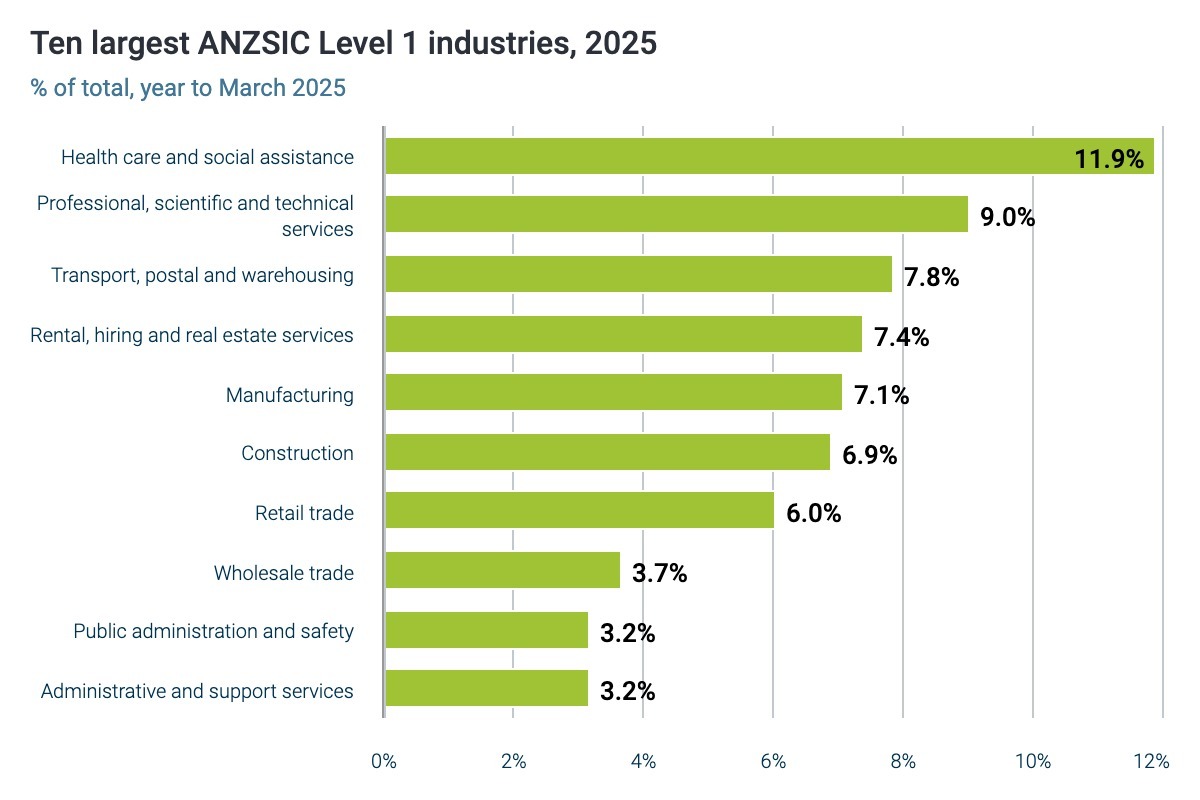 Source: Infometrics
Nelson is also an important tourism destination. In the first quarter of 2026, tourists spent $529.6 million - an 11.3% increase from previous records. While this backs local jobs, hospitality and tourism employment is inherently seasonal, creating income uncertainty for affected workers.
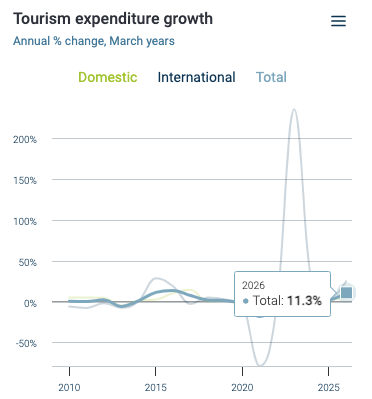
Source: Infometrics
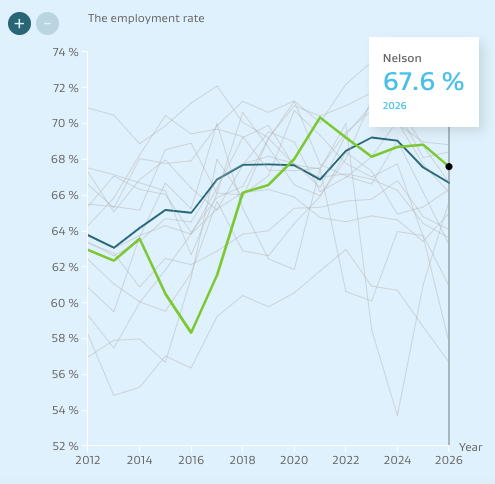
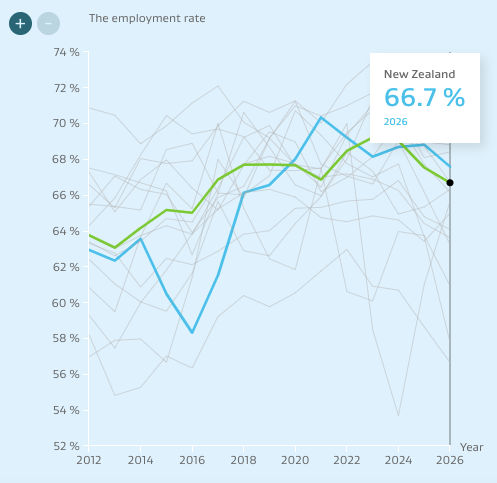
Even so, the region has a strong employment rate, currently sitting at 67.6%, which is higher than the national rate of 66.7%.
Source: Regional Economic Activity Web Tool
Small-sized businesses prevail, with only 30 of the 6,804 in Nelson employing 100 or more workers. 17.2% have five or fewer employees.
How much do Nelson residents earn and spend?
Incomes in Nelson sit below the national average. The median income in Nelson is $38,800, compared to the national figure of $41,500.
For most households, this income is stretched across:
- Rent or mortgage repayments
- Transport and fuel
- Food, utilities, and family expenses.
Housing is one of the steepest monthly costs for most Nelson households. According to the 2023 Census, there are 22,626 dwellings in Nelson, and demand for housing has risen steadily alongside population growth.
Data from MBIE also shows a clear upward trend in weekly rents:
|
Year
|
Mean Weekly Rent
|
|
2023
|
$456
|
|
2024
|
$477
|
|
2025
|
$500
|
Source: Regional Economic Activity Web Tool
The rent-to-income ratio in the area as of the first quarter of 2026 is more than the national ratio (22.8% vs 19.8%), meaning that rent is more expensive in Nelson.
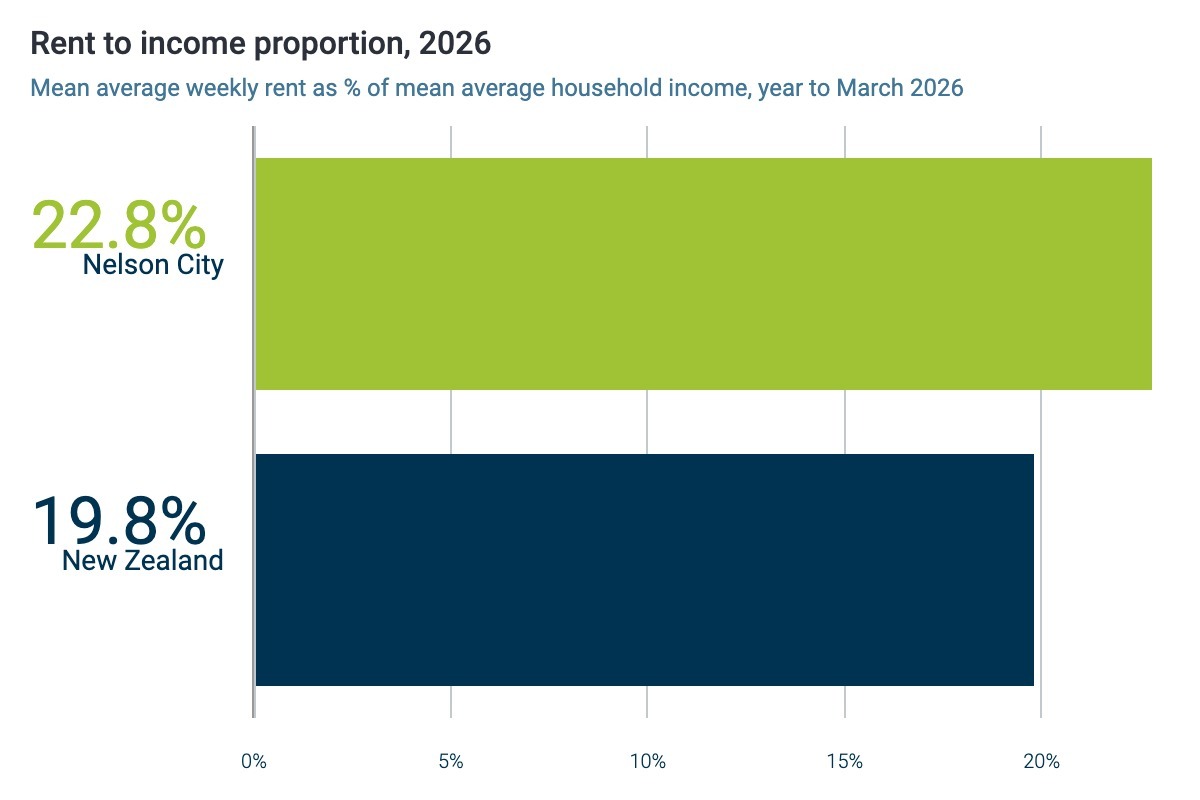 Source: Infometrics
If your income stops, even for a short time, it can jeopardise your ability to:
- Pay your mortgage or rent
- Cover bills and daily costs
- Support your family.
Your income is one of your most valuable assets and needs protecting.
How income and mortgage protection insurance help
If you cannot work due to illness or injury, income protection and mortgage protection insurance can help keep things stable, providing regular payments while you recover.
Key benefits:
- Replace a portion of your income
- Help cover rent, mortgage, and bills
- Reduce financial stress during recovery
→ You can combine income and mortgage protection for more flexibility
→ Some policies can include redundancy cover.
A Policywise adviser can compare options across insurers and help you choose what suits your situation.
Healthcare pressures in Nelson
Like other regional centres across New Zealand, Nelson's public health system faces ongoing challenges—and this has become increasingly visible in recent years.
The median age in Nelson City is 44 years, well above the national median of 38.1 years. 21.6% of Nelson City's population is aged 65 or older, compared with a national average of about 16%.
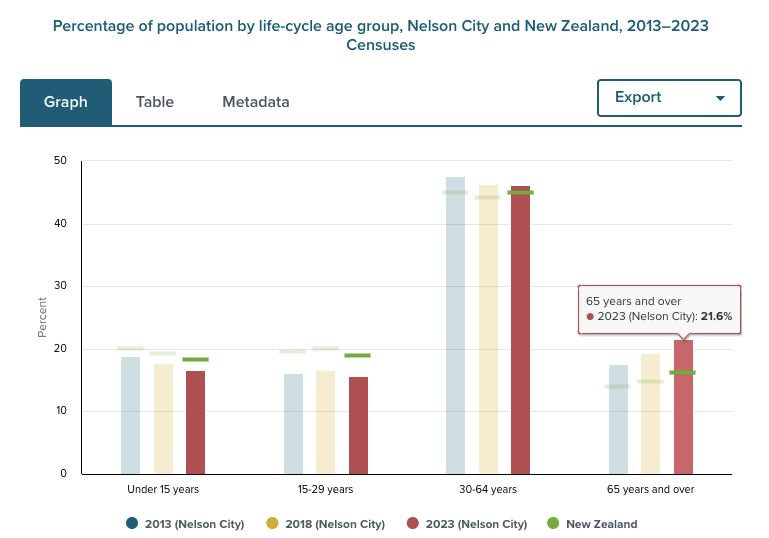 Source: Stats NZ
As the aging population increases, demand for specialist care rises.
Compounding the issue is the cancer incidence rate per 100,000 people in Nelson and Marlborough (joint 2023 report), which is 316.30.
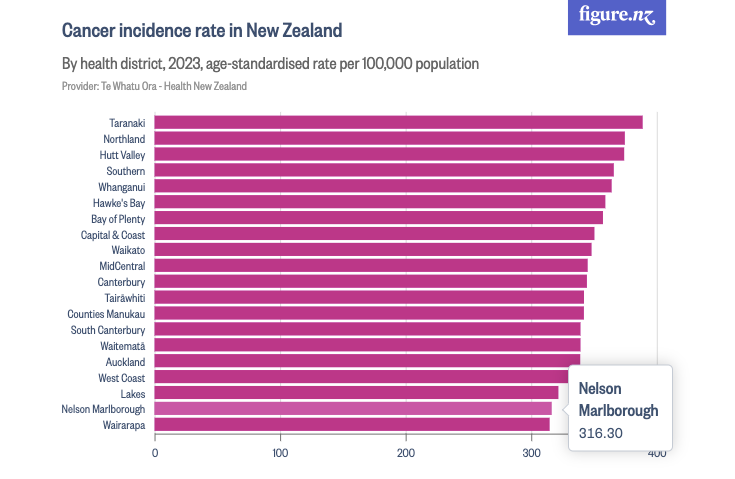 Source: Figure.NZ
A 2025 Health New Zealand clinical quality review noted that several specialist services in Nelson and Marlborough are under heavy pressure.
As of April 2025:
- 4,077 patients were waiting longer than the recommended timeframe for a first specialist assessment
- 1,416 patients had been approved for treatment but were not treated within the required timeframe.
If you turn to private healthcare to avoid long wait times, the costs can rise quickly. Surgeries may cost tens of thousands of dollars, while specialist appointments, diagnostic scans, cancer treatments, and medications can add extra expense.
|
Treatment or Test
|
Indicative Private Cost
|
|
Prostate cancer surgery
|
$24,800 – $31,100
|
|
Breast cancer surgery
|
$8,700 – $27,200
|
|
Chemotherapy (course or advanced drugs)
|
$15,000 – $170,000
|
|
Radiation therapy
|
$20,000 – $70,000
|
|
Colonoscopy (diagnostic)
|
$2,000 – $3,800
|
|
Prostate biopsy
|
$5,500 – $8,000
|
How health and trauma insurance help
Health insurance enables access to private care faster and reduces out-of-pocket costs. It can help you:
- Get treatment sooner
- Avoid public system delays
- Cover surgery, tests, and specialist care
→ Options can include cover for cancer, mental health, and non-Pharmac drugs.
Trauma (critical illness) insurance provides a lump sum if you are diagnosed with a serious condition. This allows you to:
- Focus on recovery
- Cover treatment or time off work
- Support your family.
Total permanent disability (TPD) insurance provides additional financial support if you become permanently unable to work. It can help you:
- Manage ongoing living and medical costs
- Pay for necessary adjustments, such as home modifications
- Support your family if you can no longer earn an income.
A financial adviser from an insurance broker like Policywise can compare policies from different insurers and help you find cover that fits your needs and budget.
Lifestyle, dependants, and financial risk in Nelson
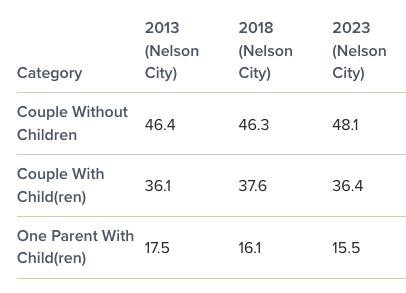
Nelson has a diverse and growing population with strong family and community character. It is currently home to 14,097 families, spread across 20,577 households.
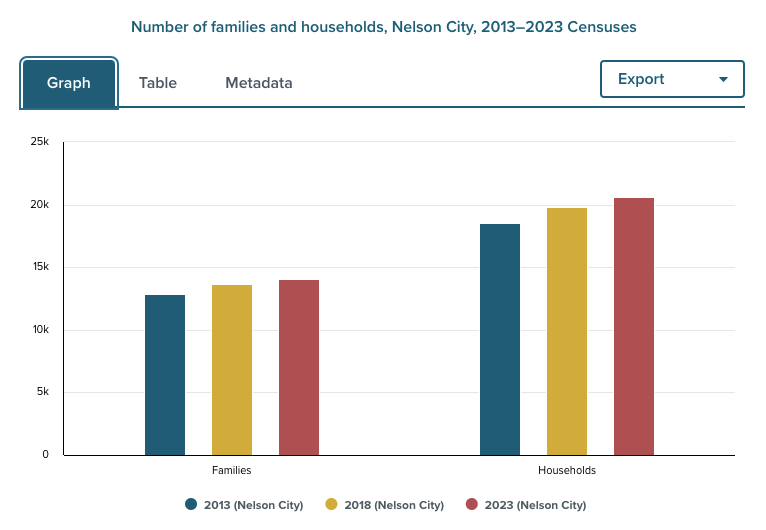 Source: Stats NZ
Within these numbers, the 2023 Census shows that 36.4% of families are couples with a child/children, while 15.5% are single-parent families.
Source: Stats NZ
For families in Nelson, financial stability means being able to cover costs and protect dependants.
Among 54,300 people, 62.4% are under the dependancy ratio (residents aged 15 or under and 65 or older), and 3,800 people are on beneficiary support.
How life insurance helps protect your family
Life insurance pays a lump sum if you pass away or are diagnosed with a terminal illness, giving your family financial security and peace of mind.
It can help:
- Pay off the mortgage
- Cover daily living costs
- Fund your children's education
→ You can combine life cover with trauma or disability insurance
→ Options include joint and family cover.
Nelson is a region of hardworking people and tight-knit communities, many with significant financial commitments. Whether you are a horticulture worker in the Waimea Plains, a fisheries worker at Nelson Port, a tradesperson in Richmond, a teacher or healthcare worker in Nelson City, or running your own small business, the risk of illness or injury affecting your income is real.
A Policywise financial adviser can help you find the right cover for where you are in life, what you earn, and who depends on you.














.png?width=272&height=60&name=PartnersLife_Wordmark_RGB-2%20(1).png)
.png?width=226&height=42&name=logo_southern-cross%20(1).png)